Good parents do not hand their kids a tablet. That is the lie I believed for about six months, until our second child arrived and our screen rules fell apart by Tuesday, right around the third straight night of broken sleep.
Here is what I know now. Screens are not going away, and guilt does not make them smaller. In our house we stopped chasing a perfect screen-free life and started building screen time rules that fit the way our days actually run. Some rules worked. Some flopped, and we changed them. That is the honest version.
The shift that helped most was treating screens like dessert, not poison. Dessert has a time and a place, and nobody cries about the rule because it is fair and clear. These are the screen time rules for kids that finally stuck in our home, and every one survived contact with tired parents and a cranky preschooler. Steal the ones that fit your family and skip the rest.
📌 Key Takeaways
- ▸Rules about when and where beat strict minute counting.
- ▸Protect sleep, meals, and movement first. Screens fill the gaps.
- ▸Put your own phone down. Kids copy what they see.
- ▸Choose the content together instead of only watching the clock.
- ▸Progress beats perfection. Restart any rule that breaks.

In This Post
- Use the when/then rule instead of arguing about minutes
- Park every device in one charging spot at night
- Watch with them sometimes, and talk while you watch
- Keep meals screen-free, phones included
- Write a short family media agreement and sign it together
- Tie extra screen time to the daily routine chart
- Turn screens off an hour before bed
- Put your own phone down first
- Pick the content, not the clock
- Block one screen-free stretch every week
- Give a five minute warning before screens end
1. Use the When/Then Rule Instead of Arguing About Minutes
One sentence ended our daily debate.
In our house it sounds like this: when the backpacks are unpacked and the teeth are brushed, then the tablet comes out. Nobody argues about thirty minutes versus forty, because the rule is about order, not the clock. Kids can argue with a number. They cannot argue with a sequence.
The when/then rule works because it puts you and your child on the same team. You are not the villain taking the tablet away. You are the keeper of the order.
Pick the first thing. Keep it small and visible, like shoes by the door or homework on the table.
Name the screen time that follows. Say the amount and the device out loud so there is no confusion later.
Keep the order the same every day for two weeks. Repetition is what makes it stick.
2. Park Every Device in One Charging Spot at Night
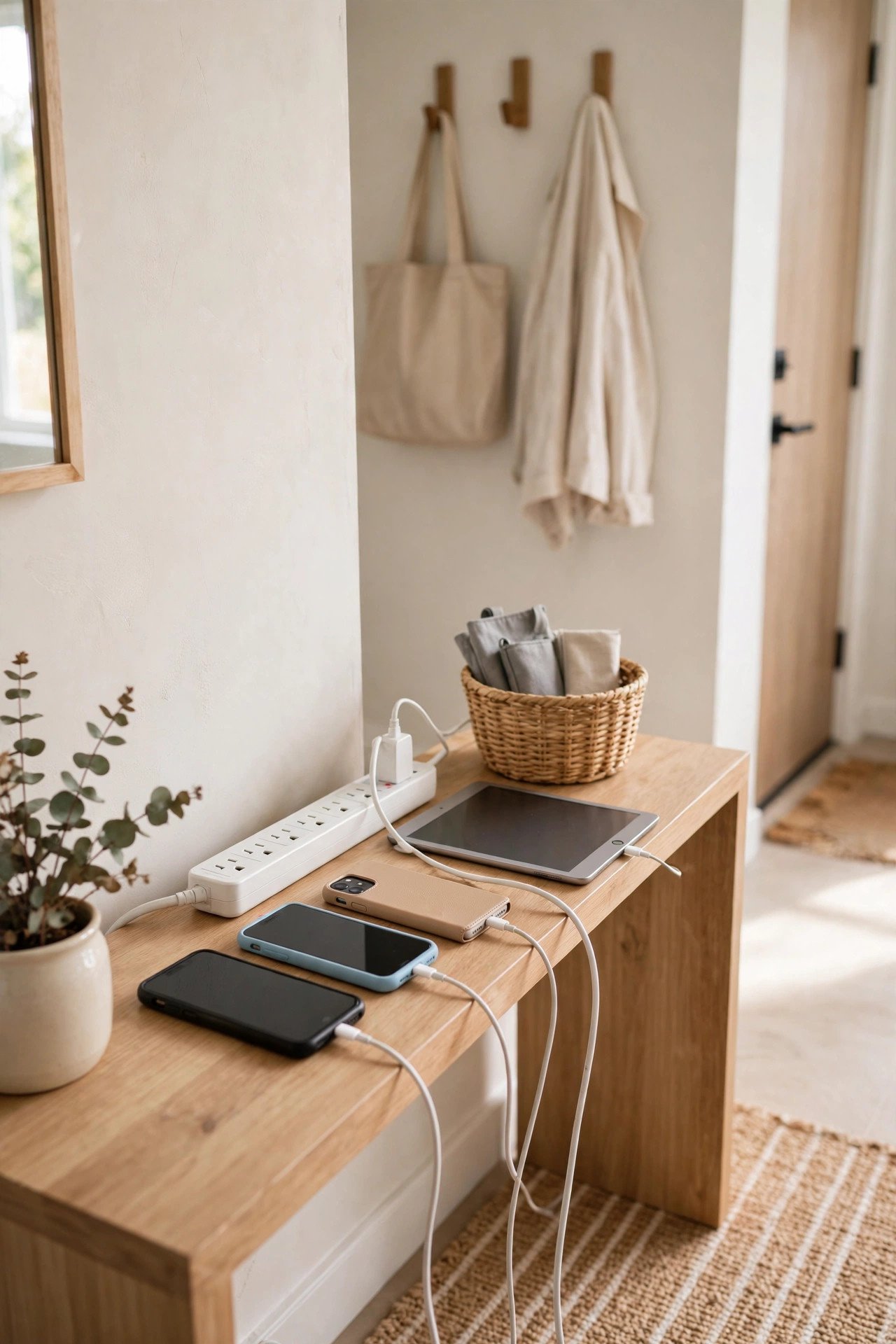
The tablet used to sleep on my nightstand, which meant it was the first thing I reached for in the morning, half asleep, and the last thing the kids begged for at night. Every device with a charger scattered around the house was a battle waiting to happen.
Now everything charges in one spot in the hallway: the phones, the tablet, the handheld game. The house feels different after eight in the evening, quieter in a way I did not expect.
Bedrooms are for sleep, not for screens. That one line is the whole rule, and even our five year old can repeat it.
3. Watch With Them Sometimes, and Talk While You Watch
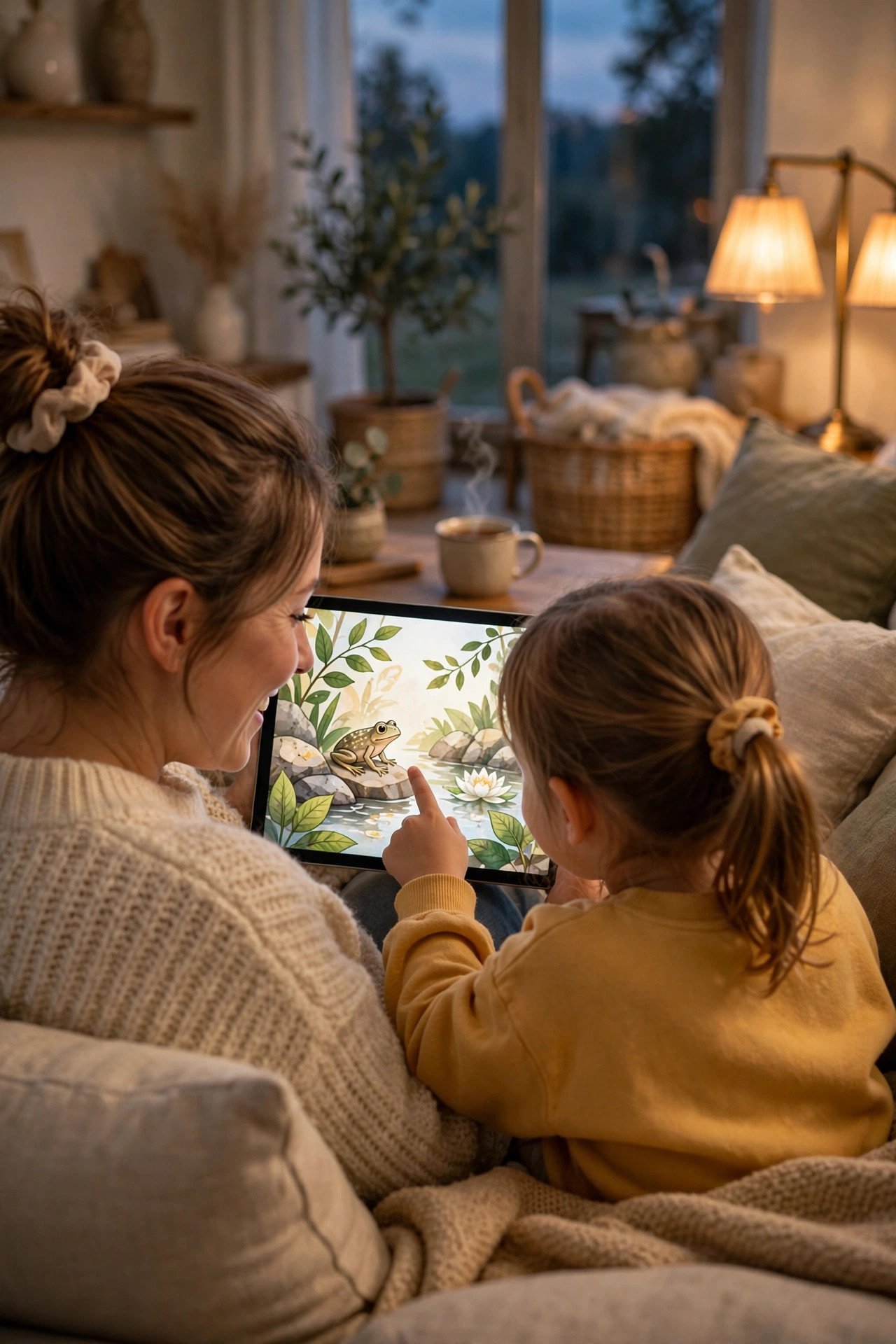
I used to park the kids in front of a show and answer emails in the next room. It felt productive. It also meant I had no idea what they were watching for forty minutes at a stretch.
These days I sit down for the first ten minutes of something new. Just ten. I ask one question, like which character they would pick as a friend, and then I get up. Those ten minutes tell me more than any parental control dashboard ever did.
Ten minutes of co-viewing buys you weeks of trust. Kids tell you what is on their screen when they feel like you are curious, not suspicious.
💡 Quick Tip
If you cannot sit down to watch, ask them to teach you the game or show later. A kid explaining their screen to you is doing real thinking, and you learn what they love.
4. Keep Meals Screen-Free, Phones Included

Last spring our dinners looked like this: two kids half-watching a tablet propped against the water jug, my husband checking scores, me answering a text with one thumb. Nobody talking. The food going cold while four people sat in the same room.
So we made the table a no-screen zone. Phones go on the kitchen counter, face down, before anyone sits. The first week was awkward. By the third week the kids were telling us playground stories we would never have heard.
Tech-free meals are the fastest win on this whole list. Start with dinner only and protect it like an appointment.
Four people, four screens, cold food, and nobody talking.
Phones face down on the counter. Warm food, playground stories, and a table that feels like family again.
5. Write a Short Family Media Agreement and Sign It Together
The payoff of writing the rules down is that you stop being the bad guy. The paper is the bad guy. When my daughter says the tablet time is unfair, I point at the agreement she signed with a purple marker, and we both laugh a little.
Keep it short. Ours fits on one page and covers where screens live, when they rest, and what happens when someone breaks a rule. We wrote it at the kitchen table on a Sunday, and the kids added two rules for me and my husband.
Rules everyone signs feel fair. Rules one person announces feel like a punishment.
Your agreement needs only four lines
6. Tie Extra Screen Time to the Daily Routine Chart
We used to hand out the tablet whenever we felt like it. Screen time appeared on parent mood and vanished the same way. Then we tied it to the routine chart, and the chart became the boss instead of me.
The kids check off their morning jobs, and the screen time square feels like winning a prize. Nobody begs, because the chart decides, not me.
One upgrade to your routine: add a screen time square to it. We print ours from this printable daily routine chart for kids. It is the square the kids ask about first.
7. Turn Screens Off an Hour Before Bed
The mistake I made for a year was letting the last show run right up to lights out. My son would fall asleep with cartoon songs stuck in his head and wake up groggy, and I blamed the school mornings.
Now screens go off one hour before bed. That hour belongs to baths, books, and the world’s slowest tooth brushing routine. The first three nights he complained. On night four he asked for the dinosaur book instead of the tablet.
Protect the hour before sleep and the mornings fix themselves. Everything in our house got calmer once bedtime stopped competing with a screen.
| Wind down with screens | Wind down without screens |
|---|---|
| Brain still buzzing, tossing and turning. | Body slows down, drifts off easier. |
| Groggy starts, slow to wake. | Calmer wake ups, steadier mornings. |
| One more episode, always one more. | Books, baths, and silly bedtime chats. |
8. Put Your Own Phone Down First
Here is the belief I had to break in myself: my phone is different because I am the adult. Work messages, the school group chat, the news. All very important, all on a screen my kids watch me stare at for hours.
Kids copy what they see, not what they are told. When I started parking my phone in the basket during our screen-free windows, my daughter noticed on day one. She said, your phone is resting too. She was right, and it stung a little.
You cannot enforce a rule you visibly break. Put your phone down first and the rest of this list actually sticks.
Park your phone in the basket too.
Say out loud, my phone is resting.
Keep one phone-free hour each day.
Scrolling while telling kids to get off.
Phones at the table for one quick thing.
Falling asleep with your phone in bed.
9. Pick the Content, Not the Clock
The rule: we choose the show, not the app. The app chooses whatever keeps them watching longest. We choose what is worth their time.
Once a week I sit with the kids and we pick three shows or games together. They get a vote. I get a veto. We skip anything with autoplay that never ends, and we favor things with an actual ending, a story, or something they can build or make.
A quiet show they picked with you beats a loud feed picked for them. Content quality matters more than the clock, and choosing together takes the mystery out of the screen.
If you change nothing else, choose what they watch instead of only counting minutes.
10. Block One Screen-Free Stretch Every Week
On Sunday mornings there is a basket by our front door. Phones go in, the tablet goes in, and the whole house gets two hours with no screens at all. The basket looks ordinary. What happens after is not.
The first time we tried it, the kids wandered around like the house had lost power. Then they built a fort out of every cushion we own. Now they ask for basket time, which still surprises me.
Do not start with a full day. Two hours on a weekend morning is plenty. When you need ideas to fill the time, our list of screen-free activities for kids has never let us down.
⚠️ Watch Out
Do not pick your busiest day. A screen-free block works when the house is calm, not when everyone is already bored and cranky.
11. Give a Five Minute Warning Before Screens End
The meltdown at minute thirty-one is the reason most screen rules die. The tablet goes dark, the child goes volcanic, and the parent hands it back to buy peace. I have done this. It never buys peace.
The fix is boring and it works: warnings. Five minutes, then two minutes, then one. Say it out loud and show the timer on your phone so they can see it. When time is up, the screen goes to its spot and you name the next thing right away. Snack time. Park shoes on. It is the same calm warning rhythm we use in our positive discipline strategies.
Endings feel fair when they are announced. Surprise endings feel like theft.
- ▸Say it like this: “Five more minutes, then the tablet sleeps in the basket.”
- ▸“When the timer rings, we put shoes on for the park.”
- ▸“Last episode, then we pick the bedtime book.”
Screen Time Questions Parents Ask Me
How much screen time is actually okay?
There is no magic number, and even the pediatric guidance has moved away from one strict limit. A common starting point is under an hour a day for little ones and one to two hours of recreational screen time for older kids. Watch the pattern more than the clock. If sleep, play, and mood look healthy, you are probably fine.
Do educational apps count as screen time?
Yes, they count, but they are not all equal. An app your child builds or solves things in is different from an autoplay video feed. Sit with them sometimes and treat it like homework help, not background noise.
My kid melts down when the tablet goes off. Help?
Use warnings and a timer every single time, and name what comes next before the screen ends. Stay calm and do not hand it back, because giving in teaches them that screaming works. In our house the meltdowns faded fast once the ending became predictable.
Should I ban YouTube completely?
You do not have to, but do not hand over the open app. Pick channels together, turn off autoplay, and keep it on the family tablet where you can see it. Boundaries beat bans, because bans just move the battle somewhere else.
What if my partner and I disagree on the rules?
Start with the two or three rules you both already agree on, like no phones at dinner and devices out of bedrooms. Write those down first. A short list you both enforce beats a long list only one of you follows.
📌 Good To Know
If one question worries you more than the rest, start there. One rule you keep beats five you abandon.
The Short Version
You do not need a perfect system. You need three or four screen time rules for kids that your family can keep on a tired Tuesday, plus the grace to restart when a rule breaks. Screens are not the enemy. They are part of the world our kids are growing into, and our job is to teach the balance, not win a war against the tablet.
Start with the rule that felt most doable while you were reading. Try it for one week. Then come back and add another. Slow and steady wins the screen battle every time.
Pin this post to your parenting board so you can find it the next time the tablet negotiations start.
You Might Also Like
- Screen-Free Activities for Kids: When the tablet goes off, this list keeps the fun going.
- Printable Daily Routine Chart for Kids: The morning and evening chart we use to earn screen time.
- Positive Discipline Strategies: Calm tools for the moments when limits get tested.