: LumaParenting
Title: Positive Discipline Strategies: 12 That Actually Work
Slug: positive-discipline-strategies
Category: Positive Parenting
Primary keyword: positive discipline strategies
Secondary keywords: connection before correction; natural consequences for kids; calm down corner
Meta description: 12 positive discipline strategies that trade yelling for connection: calm down corners, natural consequences, and firm, kind limits for toddlers through tweens. Save this list for the next rough day.
Color palette (used identically in every infographic):
– ACCENT: #C96F4A
– ACCENT_DARK: #8A4630
– BG_TINT: #FAEFE6
– TEXT: #3B332C
Positive Discipline Strategies: 12 That Actually Work
Last Tuesday my six year old threw a shoe at the wall because I asked him to put on his socks. Not a sneaker. A shoe. At the wall. I stood there with one sock in my hand and thought, how did we get here?
I had read the parenting books. I knew the scripts. And still, in that hallway, every calm phrase I had memorized evaporated. I raised my voice. He cried harder. Nothing about the morning got better.
That is the gap positive discipline strategies are meant to close. Not the gap between a good parent and a bad one. The gap between the parent you want to be at 8am and the parent you actually become when a small human hurls footwear at your drywall.
Positive discipline is not permissiveness and it is not a script you have to nail. It is a set of practical moves that teach instead of punish. Connection before correction. Limits that stay kind and firm at the same time. Repair when you lose it, because you will.
I use these twelve in my own house. They work on the ordinary bad days, which is most days.
📌 Key Takeaways
- Positive discipline teaches. Punishment scares. The goal is a child who can regulate, not one who is afraid of getting caught.
- Connect before you correct. A dysregulated kid cannot learn from a lecture.
- Limits can be kind and firm at the same time. No does not need a raised voice.
- Repair matters more than perfection. Apologizing to your child models the exact skill you want them to learn.
- Start with one strategy, not twelve. Pick the one that fits today’s hardest moment.
📋 In This Article
- Connect Before You Correct
- Name the Feeling Before You Fix the Behavior
- Offer Two Choices, Not Twenty
- Let Natural Consequences Do the Teaching
- Build a Calm Down Corner, Not a Punishment Chair
- Make Routines So Predictable They Become the Boss
- Swap “Good Job” for “I Notice”
- Solve It Together at a Family Meeting
- Repair Out Loud When You Lose It
- Give Them a Job Instead of a Lecture
- Pause Before You Speak When Your Blood Is Boiling
- Tell Them What to Do, Not What Not to Do

1. Connect Before You Correct
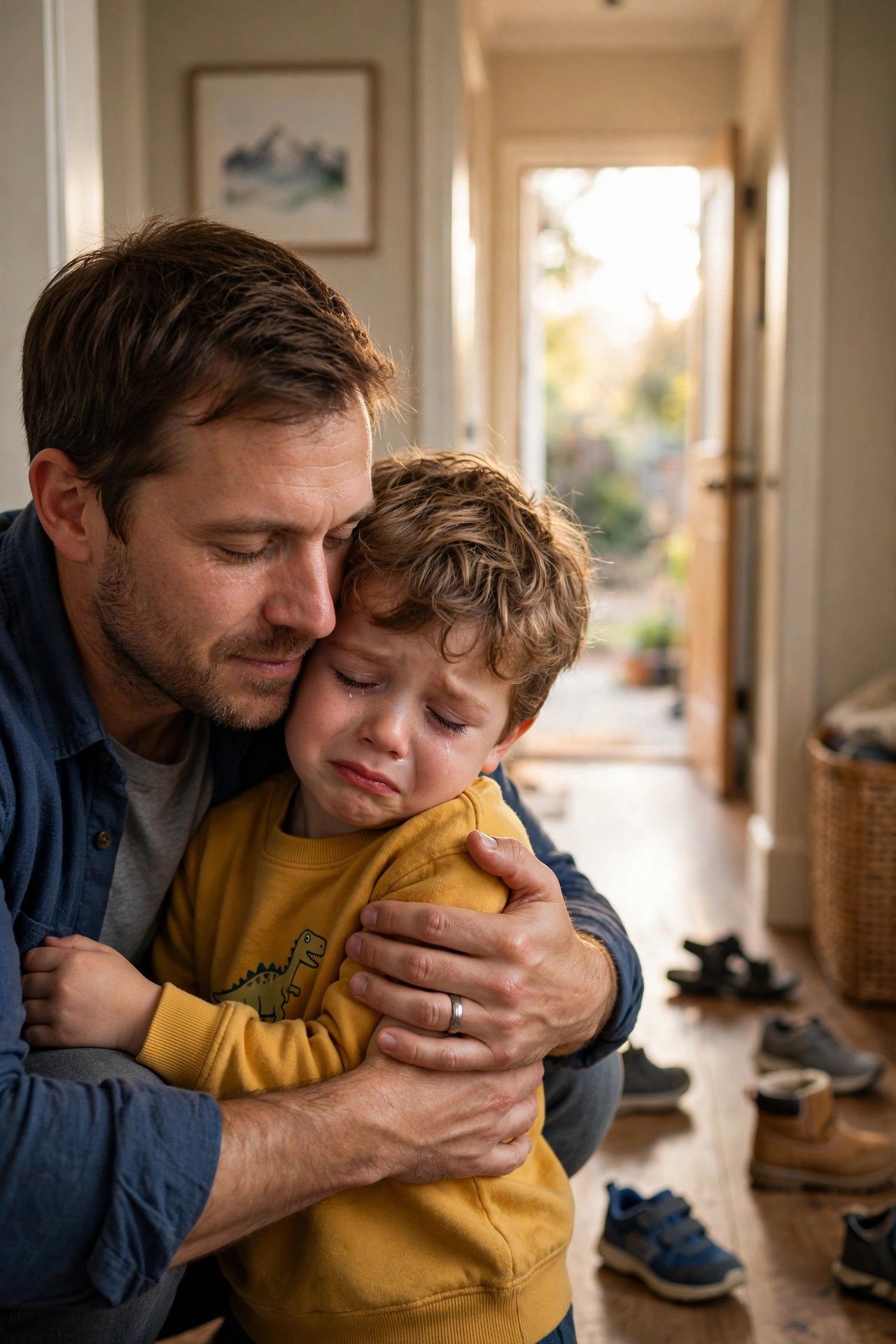
When your child is melting down, your words land like background noise. Connection comes first, always. Get low, touch their shoulder, and name what you see.
Those thirty seconds are not letting them off the hook. They open the door to the thinking brain, so the correction can actually land.
In our house it looks like me kneeling in the cereal aisle while my toddler screams about the red box. I say, you really wanted that one. I get it. Then we talk about what happens next. It is not pretty. It works.
Try it in this order:
- Body first: get low, soften your face, slow your voice.
- Feeling second: name what you see.
- Limit last: state what happens now, briefly.
Kids who feel felt stop fighting and start listening.
A child who feels felt can learn. A child who feels shamed can only defend.
2. Name the Feeling Before You Fix the Behavior

They are crying and you have no idea why, and they have no idea why either. Most kids under seven cannot tell you what they feel. They can only show you: the thrown block, the screech, the stiff little shoulders.
Handing them the word is half the fix. You look furious. Your body is shaking and your fists are tight. That looks like anger to me.
This is not therapy talk. It is a shortcut. A child who can say I am angry is a child who might not need to throw the block.
Keep your list of feeling words short at first. Mad, sad, scared, frustrated, left out, embarrassed. When they hear you use them, they borrow them.
My daughter started saying I am frustrated instead of shoving. It took weeks. It was worth it.
💡 Quick Tip
Not sure of the feeling? Guess out loud and let them correct you: “You seem sad?” That invites a “No, I am mad,” which is exactly the naming you wanted.
3. Offer Two Choices, Not Twenty

Get dressed is a demand a tired three year old will fight. Red shirt or blue shirt is a decision the same child will make happily. Same outcome. Different battle.
The rule that makes this work: both choices must be fine with you. If you cannot live with one of them, do not offer it. Kids sniff out fake choices fast, and a fake choice is a power struggle wearing a costume.
This stops working when you overuse it. Reserve choices for the moments that usually blow up: getting dressed, leaving the park, sitting at the table, bedtime.
Watch the wording too. Do you want to brush your teeth invites a no you will not enjoy. Teeth now or teeth after the story keeps the yes inside the question.
Offer two options you can live with.
Offer the choice before the meltdown starts.
Offering a choice where one option is a threat in disguise.
Asking when you have already decided the answer.
4. Let Natural Consequences Do the Teaching
You do not have to be the enforcer every time. Life is a strict teacher on its own, and it never raises its voice.
When the consequence flows from the choice, your child learns without you becoming the villain. You get to stay on their team, which is where you want to be when the lesson lands.
Some natural consequences you can step back and allow:
- They refuse a coat, they feel chilly at the bus stop.
- They leave a toy outside, it gets rained on.
- They dawdle at breakfast, they miss cartoon time.
The hard part is not swooping in to rescue them. Step back only when it is safe and the stakes are small. A wet toy teaches. A dangerous street does not.
I will be honest: the first time I let my son skip the coat, I stood on the porch holding the thing, biting my tongue while he shivered at the bus stop. He has worn the coat every day since. I have never said a word about it.
| Natural Consequence | Logical Consequence |
|---|---|
| Comes from life itself. You step back. | Comes from you. It must fit the behavior. |
| Forgets lunch, feels hungry at school. | Draws on the wall, helps wash it off. |
| Best when: safe, small stakes, you can stay kind. | Best when: related, respectful, decided calmly in advance. |
5. Build a Calm Down Corner, Not a Punishment Chair
A calm down corner is the opposite of time out. It is a soft place your child can choose, with tools that help big feelings get smaller.
Put it in a quiet corner of the living room, not a dark hallway. The goal is regulation, not banishment. Ours is a corner of the living room with a beanbag and a basket that mostly holds crayons and one very chewed stuffed bunny.
Stock it with three or four things:
- A pillow or beanbag to sink into
- Something to squeeze, like a stress ball or stuffed animal
- Feelings cards or a feelings chart they can point at
- Paper and crayons for scribbling the mad out
Use it yourself first. When your temper rises, sit in the corner and breathe. Kids copy what they see. For more ideas, see my sensory play ideas for toddlers.
6. Make Routines So Predictable They Become the Boss
Here is the rule: kids fight parents, but they rarely fight a chart.
When the routine is visible and the order never changes, you stop being the one who says no. The chart says it is teeth time. You are just the helper.
Post it where everyone can see it. Mornings and bedtimes pay off most. Keep each step small and in the same order.
- Wake, bathroom, dressed, breakfast, shoes.
- Same words each time. Teeth, book, lights out.
- Let them check off each step with a marker.
It takes about two weeks of boring repetition before it clicks. Then one morning they run through the whole thing alone while you drink your coffee hot, and you will want to frame the chart. I made a printable daily routine chart for kids. Stick it on the fridge.
What every routine needs
7. Swap “Good Job” for “I Notice”
Good job is kind, but it is empty. Your child hears it so often it stops meaning anything, and it teaches them to work for your applause instead of their own pride.
Try noticing instead. I notice you kept trying after the tower fell. I notice you shared without being asked. It is specific and true, and it tells them exactly what they did well.
Noticing builds motivation from the inside. Praise rents it from the outside.
Here is how to make the swap:
- Watch for the effort, not just the result.
- Name what you saw in plain words.
- Skip the but. Let the noticing stand alone.
It feels awkward for a week. I caught myself saying good job four times before breakfast on day one. Old habits have deep roots. Then it becomes the way you talk.
8. Solve It Together at a Family Meeting
Sunday night, we sit on the living room floor with a bowl of popcorn and fix the week. Shoes by the door. The morning rush. Who gets the front seat. Nothing is off limits.
Kids follow rules they helped make. When your eight year old suggests the shoe basket goes by the door, she will actually use it.
Keep it short and sweet:
- One compliment round. Everyone names something good.
- One problem at a time. Brainstorm fixes together.
- Write the plan down. Post it where everyone sees it.
Fifteen minutes, once a week. Ours became a family tradition we all look forward to. For more ideas like this, see these family traditions to start.
Set the tone. Snacks on the floor, no lectures, everyone gets a turn.
Pick one problem. Choose the smallest recurring fight, not the biggest.
End with the plan. Write it down and post it where everyone sees it.
9. Repair Out Loud When You Lose It
You will yell. I do. The myth is that good discipline means never losing your temper. The truth is that what you do after the yell teaches more.
Repair sounds like this: I am sorry I shouted. You did not deserve that. I was frustrated and handled it badly. Then listen.
Kids learn repair by watching repair. Every time you apologize and mean it, you are teaching them how to own a mistake without shame.
Do it soon, not perfectly. A wobbly apology tonight beats a polished one next week. And go easy on yourself after. Beating yourself up teaches them that mistakes deserve punishment, which is the opposite of everything on this list. Repair is a habit I am still learning, and probably always will be.
You yell, they cry, you feel guilty, everyone pretends it did not happen. The same fight returns tomorrow.
You pause, apologize, name what happened, and make a plan together. The rupture becomes the lesson.
10. Give Them a Job Instead of a Lecture
A child with a real job has less reason to cause trouble. Responsibility fills the space that misbehavior was occupying.
Jobs also teach the lesson lectures never do. You cannot talk a child into feeling capable. Hand them a watering can and watch.
Match the job to the age and let it be genuinely useful:
- Toddlers: wipe the table, drop clothes in the hamper, water one plant.
- Preschoolers: set napkins on the table, feed the pet, sort socks.
- School age: pack their own lunch, take out recycling, sweep the porch.
Do not redo their work in front of them. A crookedly wiped table is worth it for a kid who feels needed. For a full breakdown, see my chores by age guide for kids.
- ▸Keep the same job for two weeks before rotating.
- ▸Teach it once, slowly, then let them own it.
- ▸Thank the effort, not the outcome.
11. Pause Before You Speak When Your Blood Is Boiling
Nothing good comes out of your mouth in the first ten seconds of anger. Say nothing. Fix nothing. Only pause.
Your child watches how you handle your own big feelings more closely than they hear any lecture about theirs. The pause is the lesson.
Build a pause menu and pick your move in advance:
- Press your feet into the floor and take one slow breath.
- Say I need a minute out loud, then step into the next room.
- Splash cold water on your face. It sounds silly. It works.
Come back when your voice sounds like yours again. Ten calm minutes later teaches more than ten furious minutes now.
“I need a minute. I will be right back.”
“I am feeling frustrated, so I am going to breathe first.”
“Let us both take five and try again.”
12. Tell Them What to Do, Not What Not to Do
Do not run lands on a four year old as blah blah run. Their brain hears the action word and skips the do not. Tell them the action you want instead.
This is one of the positive discipline strategies you can start tonight, because it only changes your words, not your whole system.
Swap the no into a yes:
- Do not yell becomes use your quiet voice.
- Do not hit becomes gentle hands.
- Do not run becomes walking feet.
- Stop whining becomes tell me in your strong voice.
It feels strange at first, like you are narrating the obvious. You are. Young brains need the obvious spelled out until the habit forms. Then one day they remind each other, and you get to take the credit.
💡 Quick Tip
When you catch yourself saying “do not,” stop and ask: what do I want them to do instead? Say that sentence. It works on spouses too.
Frequently Asked Questions
What is positive discipline, really?
It is teaching, not punishing. The goal is a child who understands why a rule exists and can follow it without fear. Limits stay firm. The delivery stays kind.
Is this just permissive parenting with a nicer name?
No. Permissive parenting avoids limits to keep the peace. Positive discipline sets clear limits and holds them with empathy. Your child will hear no plenty. They just will not hear it screamed.
What ages does this work for?
These strategies work from toddlerhood through the tween years. You adjust the words and the jobs, but connection before correction works at three and at thirteen.
What if my child just laughs at consequences?
Stay boring and consistent. Follow through every time, without a lecture. Humor is often a cover for big feelings. Name the feeling, hold the limit, and try again tomorrow.
I yelled today. Did I ruin everything?
No. One bad moment does not undo a hundred good ones. Apologize, repair, and move on. Watching you own a mistake teaches them to own theirs.
How long before I see a change?
Some shifts show up in days, like fewer power struggles over choices. Deeper habits take weeks of boring repetition. Give any new strategy at least two steady weeks before you judge it.
You will not use all twelve of these every day. Nobody does. Pick the one that fits the hardest part of your day right now and try it for two weeks. That is how positive discipline strategies actually stick, one small change at a time.
The goal was never a perfectly behaved child. It is a child who trusts you enough to mess up in front of you, and a parent who can handle the mess without falling apart.
If this list helped, save it for the next rough morning. Pin it to your parenting board so it is there when you need a calmer plan.
You Might Also Like
- Slow Motherhood Guide: What It Is and How to Start
- Printable Daily Routine Chart for Kids
- Sensory Play Ideas for Toddlers
LumaParenting Guide
Get the exact words for the hard moments.
Scripts for the 12 toughest situations — public tantrums, hitting, refusing, sibling fights — plus the calm-down system for the whole family and how to repair after you lose it.
43-page PDF · Instant download · Prints on US Letter & A4 · $9.99
Get the Guide — $9.99
3 thoughts on “Positive Discipline Strategies: 12 That Actually Work”