The first time I set up sensory play, I spent forty dollars on special sand and exactly one afternoon regretting it. My toddler played with the cardboard box the sand came in. That was the day I learned the truth: toddlers do not need fancy sensory kits. They need interesting textures, and your kitchen is already full of them.
These are 15 sensory play ideas for toddlers made entirely from things you already own: rice, pasta, flour, water, ice, and a few minutes of setup. Every idea includes a cleanup trick, because I have mopped enough floors to know that the cleanup plan is part of the activity. Most are taste-safe for toddlers who still explore with their mouths.
The best sensory play uses one base material and simple tools. Always play on a tray or mat, keep sessions to 15 to 20 minutes, and let your toddler lead. Taste-safe versions are noted for mouth-explorers.
In this post:
1. Oobleck: The Solid-Liquid Wonder
2. Cloud Dough From Flour and Oil
3. Rainbow Rice Sensory Bin
4. Water Pouring Station
5. Frozen Toy Rescue
6. Playdough With Real Kitchen Tools
7. Pasta Threading and Sorting
8. Whipped Cream Sensory Tray
9. Calm-Down Sensory Bottles
10. DIY Texture Board
11. Sponge Squeeze Relay
12. Spice Smelling Jars
13. Cooked Spaghetti Play
14. Bubble Wrap Stomp Path
15. Ice Cube Painting
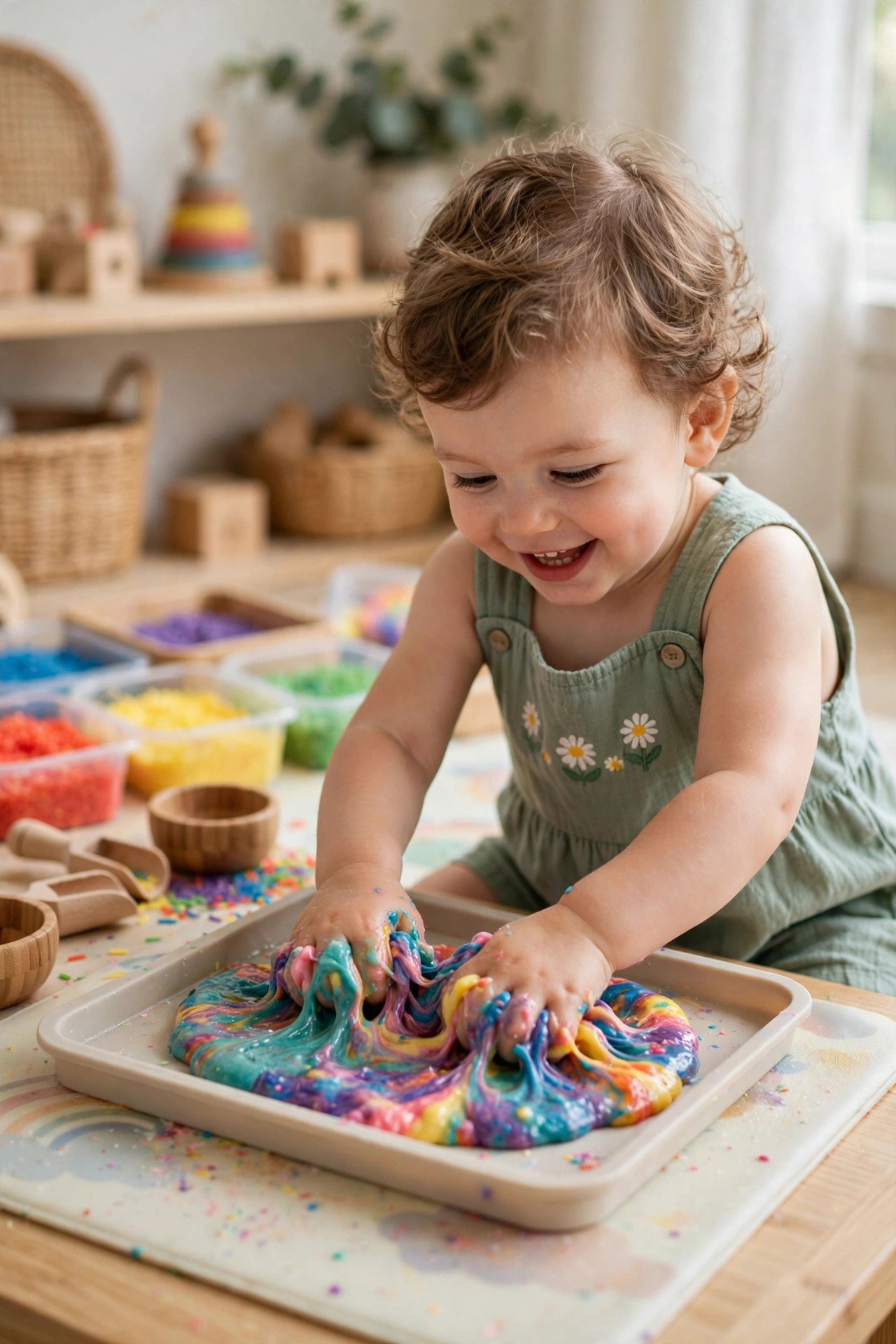
1. Oobleck: The Solid-Liquid Wonder
Mix cornstarch and water and you get something that acts solid when you punch it and liquid when you pour it. Toddlers find this genuinely astonishing. My son spent twenty minutes squeezing it and watching it drip, saying “again” every single time.
The ratio is forgiving: about 2 cups cornstarch to 1 cup water. Add food coloring if you want. It washes off hands with plain water, which is the real miracle.
💡 Quick Tip
Do not pour oobleck down the sink, it can clog drains. Let it dry in the tray, then toss the flakes in the trash.
2. Cloud Dough From Flour and Oil
Eight cups of flour plus one cup of baby oil (or coconut oil for a taste-safe version) makes a silky, moldable dough that holds shapes like wet sand. It smells faintly lovely and feels completely different from playdough, which keeps toddlers interested longer.
Serve it in a roasting pan with scoops and cups. The whole thing vacuums up easily when dry, so do not panic about the dusting of flour on the table.
3. Rainbow Rice Sensory Bin
Plain rice becomes magical with a few drops of food coloring shaken in a zip bag. Make three or four colors, pour them into a shallow bin in sections, and hand your toddler scoops and small cups. The pouring, mixing, and color blending holds attention remarkably well.
This one lasts for weeks if you store the rice in jars. Ours has been refilled four times and the kids still ask for “the rainbow bin” by name.
What to grab first
4. Water Pouring Station
The simplest idea on this list is also one of the most loved. Fill a large tray with an inch of water, add cups, ladles, funnels, and a few drops of food coloring. Toddlers will pour water from vessel to vessel for an astonishingly long time.
Do this outside or on a towel-covered floor. Spills are not accidents here, they are the activity. My daughter’s pouring skills improved so fast I stopped needing sippy cups with valves.
5. Frozen Toy Rescue
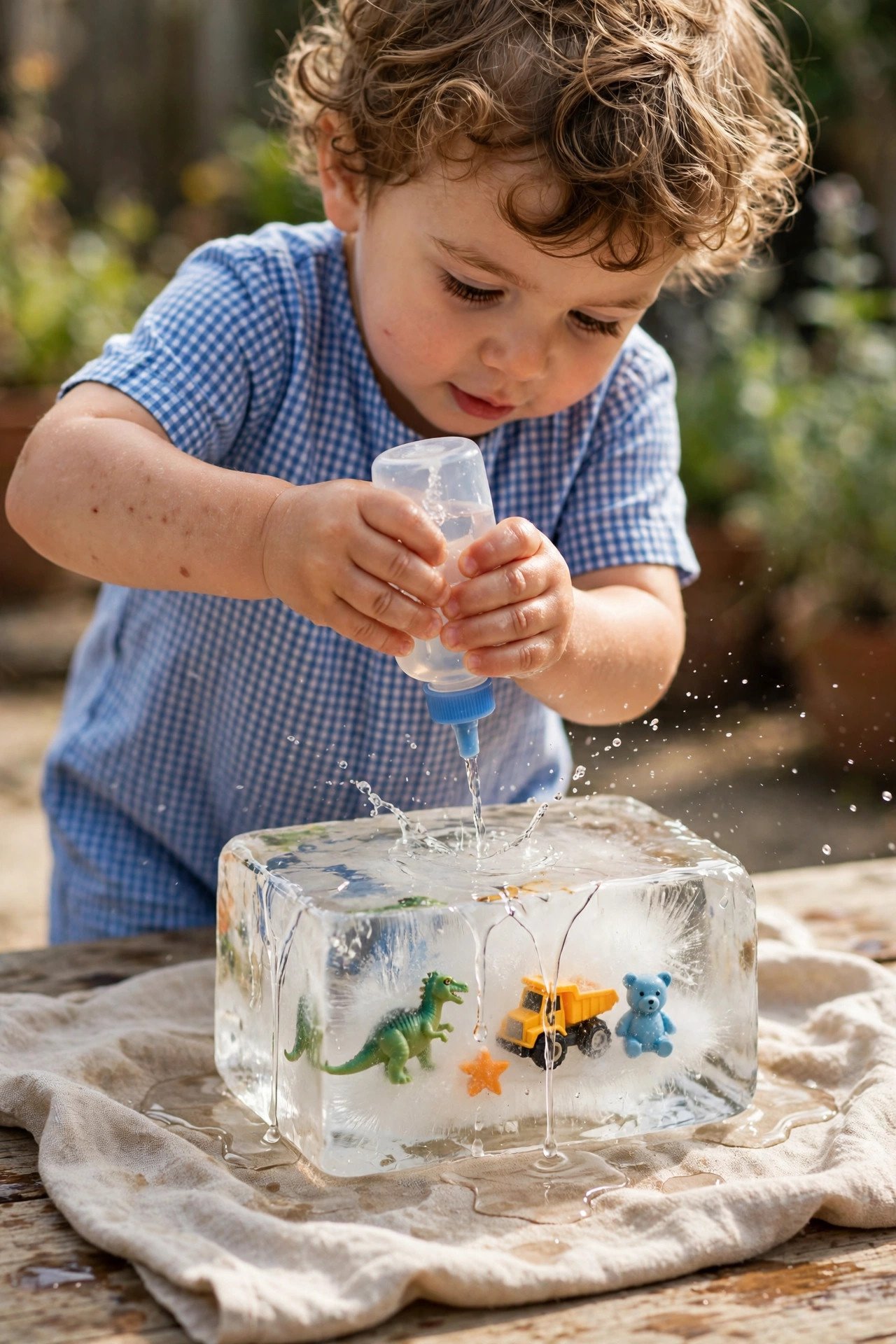
Freeze small plastic toys in a container of water overnight. In the morning, hand your toddler the ice block with warm water in a squeeze bottle, a spoon, and a bowl. The mission: rescue the toys. The melting, chipping, and splashing keeps them hooked far longer than you’d expect.
This is ideal for hot afternoons. The ice keeps little hands cool and the activity paces itself, it ends when the ice melts, which is a natural stopping point everyone accepts.
Night before: freeze toys in a container of water.
Set out warm water, spoons, and a towel underneath.
Let them melt, chip, and splash the toys free.
6. Playdough With Real Kitchen Tools
Skip the plastic playdough sets and raid your kitchen drawers instead. A garlic press makes the best playdough hair. Cookie cutters, rolling pins, and dull butter knives turn plain dough into a full workshop. Real tools feel important, and toddlers rise to the occasion.
Make the dough together if you have time: flour, salt, water, oil, and cream of tartar. The cooking part is its own sensory activity, warm dough, floury hands, the smell of it coming together.
Plain playdough and plastic cutters, abandoned after ten minutes.
A garlic-press hair salon and rolling-pin bakery, running for forty minutes.
7. Pasta Threading and Sorting
Dry penne threads perfectly onto yarn or shoelaces, making it the ideal toddler beading material. Dye it first with food coloring in zip bags for extra appeal. Beyond necklaces, try sorting: mix three pasta shapes in a bowl and have your toddler sort them into muffin tins.
Sorting by shape is early math disguised as play. My son sorts with intense focus and then immediately mixes them all together again, which is apparently the best part.
| Pasta shape | Best use |
|---|---|
| Penne | Threading onto yarn |
| Fusilli | Sensory bin filler, fun texture |
| Macaroni | Sorting games in muffin tins |
8. Whipped Cream Sensory Tray
For toddlers who put everything in their mouths, whipped cream is the answer to shaving cream play. Spray a can of whipped cream onto a tray and let them draw, squish, and taste freely. It’s completely safe and cleanup means wiping the table.
Add a few drops of food coloring and let them swirl it into patterns. This is the lowest-stress sensory play on the list, which makes it a gift for tired parents too.
If your toddler still mouths everything, every sensory material should be taste-safe. Whipped cream, cooked pasta, and plain flour are your friends.
9. Calm-Down Sensory Bottles
Fill a clear plastic bottle three-quarters with water, add glitter, a squirt of clear glue, and a few drops of food coloring. Glue the cap shut. Shake it and watch the glitter swirl and settle. It’s mesmerizing for toddlers and genuinely calming during meltdowns.
Keep one in the car and one in the calm-down corner. Ours has survived two years of shaking and still works. Make a few with different contents: beads, oil and water, pom poms.
- ▸Clear plastic bottle with a tight cap
- ▸Water, glitter, and clear glue
- ▸Superglue the cap shut, always
10. DIY Texture Board
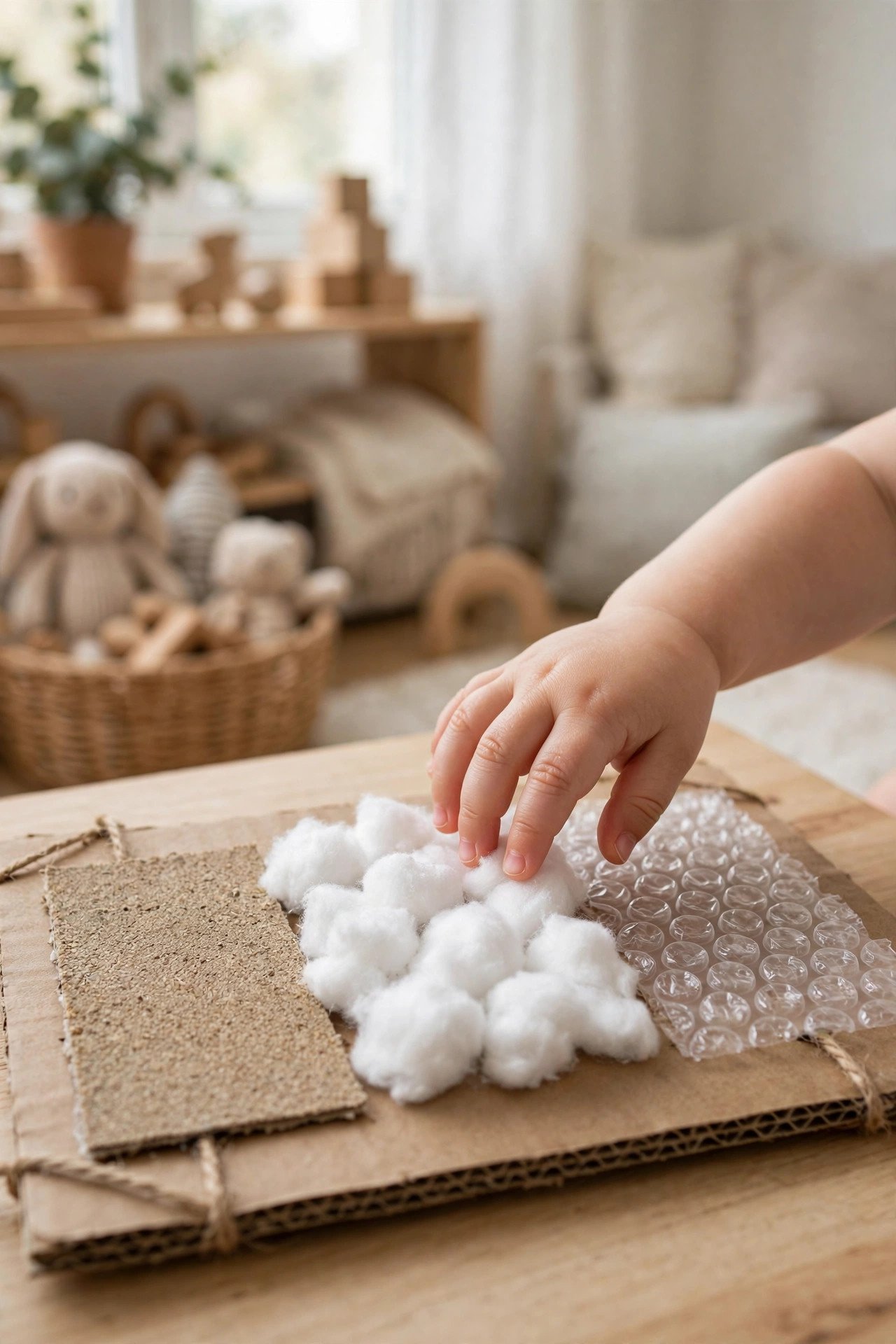
Glue scraps to a piece of cardboard: a square of sandpaper, a cotton ball, a bit of bubble wrap, felt, foil, and a sponge. Toddlers run their hands over each square, and you name the textures together: rough, soft, bumpy, smooth, crinkly.
This is language development disguised as touching things. We made ours in ten minutes and it lived on the wall by the changing table for months, the perfect distraction during diaper changes.
Use scraps you already have: fabric, foil, cotton.
Name each texture as they touch it.
Anything sharp or that sheds tiny pieces.
Glitter glued on, it comes off in mouths.
11. Sponge Squeeze Relay
Cut kitchen sponges into fun shapes, fill two buckets with water, and set up a relay: soak the sponge, run to the other bucket, squeeze it out, run back. Toddlers adore the squeezing, and the running burns energy on days you cannot get outside.
This is secretly hand-strengthening work, which helps with everything from holding crayons to zipping coats. Do it on the patio or in the bathtub to skip the mopping.
💡 Quick Tip
Cut sponges into stars and hearts with cookie cutters as a guide. Shaped sponges get twice the enthusiasm of plain squares.
12. Spice Smelling Jars
Sensory play is about more than touch. Put a spoonful of cinnamon, cocoa, dried mint, and vanilla-soaked cotton balls into small jars with holes poked in the lids. Toddlers shake, sniff, and guess, and the kitchen smells wonderful for days.
Play guessing games: “Can you find the chocolate smell?” This builds vocabulary around senses that usually get ignored. Keep the lids on tight, because cinnamon on carpet is forever.
Spice jars as forbidden objects, grabbed at every chance.
Their own smelling jars, explored properly, with new words like “spicy” and “sweet.”
13. Cooked Spaghetti Play
Cook a handful of spaghetti, rinse it cool, toss it with a little oil, and dump it in a bin. Toddlers find the slippery, wiggly texture hilarious. Add food coloring to the cooking water for rainbow noodles, or hide small toys in the tangle for them to find.
It is fully taste-safe and washes off with water. The oil keeps it from sticking to everything, which is the difference between fun and regret.
Cook spaghetti, rinse cool, toss with a spoonful of oil.
Pile it in a bin on a wipeable mat.
Hide small toys in the noodles for a treasure hunt.
14. Bubble Wrap Stomp Path
Save the bubble wrap from your next delivery and tape a path of it to the floor. Toddlers stomp, jump, and crawl across it, completely delighted by the popping under their feet. It is loud, joyful, and over in the best possible way.
This is a wonderful rainy-day energy burner. The popping gives instant feedback with every step, which is exactly what toddler brains love most.
15. Ice Cube Painting
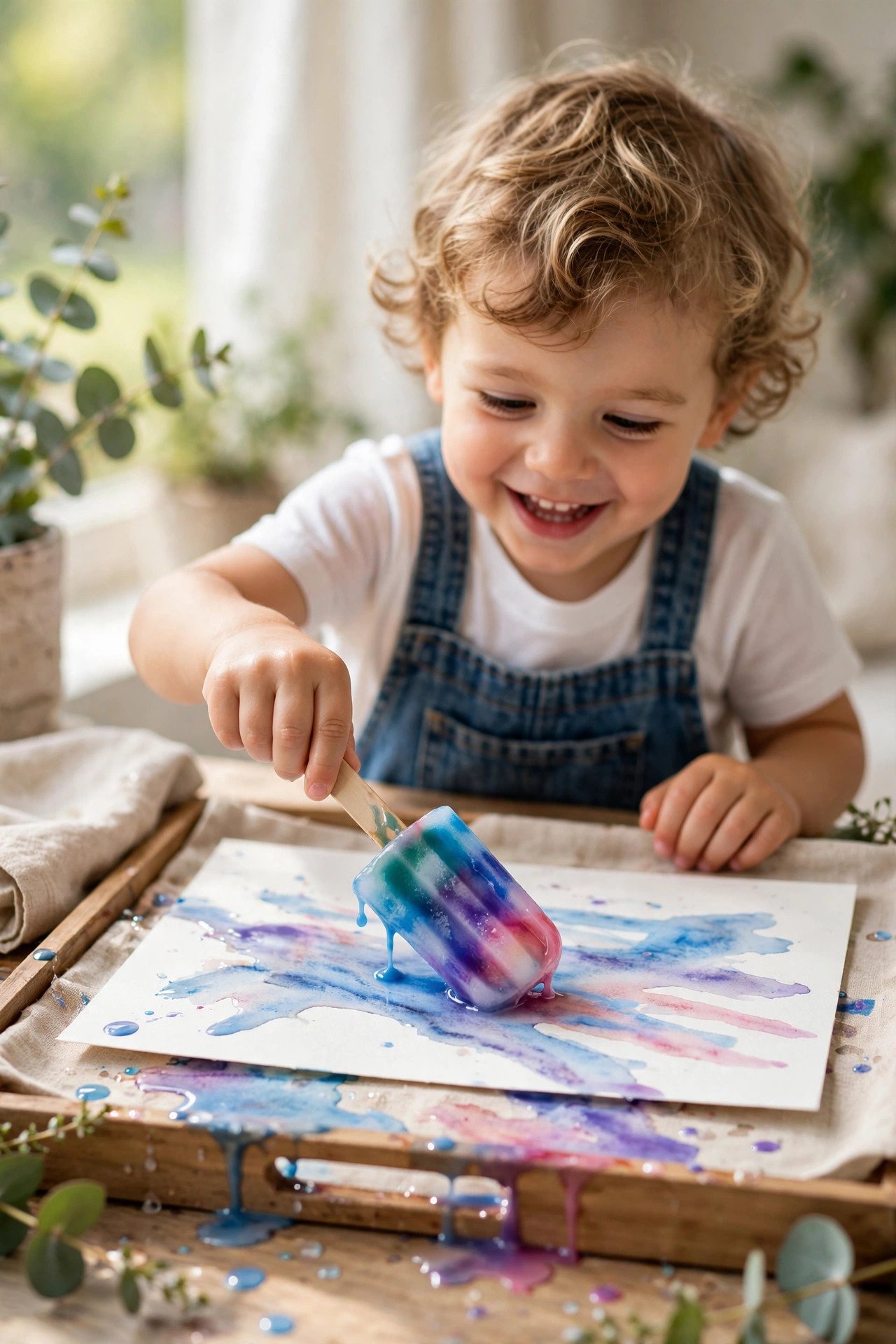
Freeze water with a drop of food coloring in each compartment of an ice tray, with a craft stick in each cube as a handle. Once frozen, toddlers “paint” on paper as the cubes melt, leaving watercolor trails. It’s art and science in one cold, delightful package.
The melting is the point, so do this on a tray. When the color fades, the painting is done, which gives the activity a natural, tear-free ending.
| Step | Details |
|---|---|
| Freeze | Water plus food coloring, craft stick handles |
| Paint | On thick paper, on a tray, as cubes melt |
| Talk | Name the colors, notice the melting |
You Might Also Like
- 25 Screen-Free Activities for Kids That Actually Keep Them Busy: more boredom busters for the whole family
- Printable Daily Routine Chart for Kids (Free Download): add sensory play to the after-nap routine slot
Frequently Asked Questions
Is sensory play safe for toddlers who put everything in their mouths?
Choose taste-safe materials: cooked pasta, whipped cream, flour-based doughs, and plain water play. Skip small dried beans, water beads, and anything with small parts for mouth-explorers, and always supervise.
How do I keep sensory play from destroying my house?
Three rules: always use a tray, mat, or bin as the boundary, keep sessions to 15 to 20 minutes, and involve your toddler in cleanup as part of the game. The container is the whole secret.
What age is best for starting sensory play?
You can start simple water play around 12 months with close supervision. The toddler years, roughly 1 to 3, are prime time, when they have the motor skills to dig in but still find every texture fascinating.
How often should I do sensory play?
Two or three times a week is plenty. Rotate the materials so they stay novel, a bin put away for two weeks feels brand new when it comes back out.
Wrapping Up
Fifteen ideas, zero special purchases. The thread running through all of them is simple: one interesting material, a clear boundary, and the freedom to explore. Start with whichever one matches what is already in your kitchen tonight.
Save this list for the next time you need twenty focused minutes, and remember the golden rule: tray underneath, timer on, and let them lead.
2 thoughts on “15 Sensory Play Ideas for Toddlers Using Things You Already Have”