Last Tuesday I asked my six year old to take his socks off the couch and he looked at me like I had handed him a math exam. That’s when it hit me. We had been redoing every small job behind him for years, and he had never once been expected to handle one. Chores for kids by age are not about turning your home into a boot camp. They’re about matching the job to what a child can actually do, so the work feels doable instead of defeating.
Toddlers can absolutely sort their own blocks. School age kids can run a whole load of laundry if someone shows them the steps. Tweens can pack a week’s worth of lunches without a single morning meltdown. This guide walks you through twelve real jobs, grouped by age, with the exact steps that worked in our house.
Expect spilled beans, crooked beds, and a slow start. That’s how skills get built.
🧺 Key Takeaways
- Start at age 2 with tiny, game-like jobs: putting toys back, tossing laundry, wiping spills.
- Ages 4 to 5 can set the table, make a bed, and feed pets with a marked scoop.
- Ages 6 to 8 are ready for the dishwasher, laundry sorting, and bathroom wipe-downs.
- Ages 9 to 12 can run full laundry, pack lunches, and handle trash and yard work.
- Their job is the doing, not the doing perfectly. Redo it quietly later if you must.

Table of Contents
- Toy Rescue Mission: Putting Every Toy Back Home
- Laundry Toss: Hamper Basketball for Tiny Hands
- Spill Patrol: Wiping Up With Their Own Little Cloth
- Bed-Making, Toddler Style: Pulling Up the Covers
- Table Setter: Napkins, Cups, and Placemats
- Pet Food Scooper: Feeding Furry Friends
- Dishwasher Pro: Loading, Unloading, and the Sharp-Knife Rule
- Laundry Sorter: Lights, Darks, and the Sock-Matching Game
- Bathroom Helper: Wiping Counters and Mirrors
- Full Laundry Boss: From Washer to Folded Drawer
- Kitchen Crew: Simple Meal Prep and Packing Lunches
- Yard and Curb Team: Trash, Recycling, and Raking
- Frequently Asked Questions
- You Might Also Like
Toy Rescue Mission: Putting Every Toy Back Home
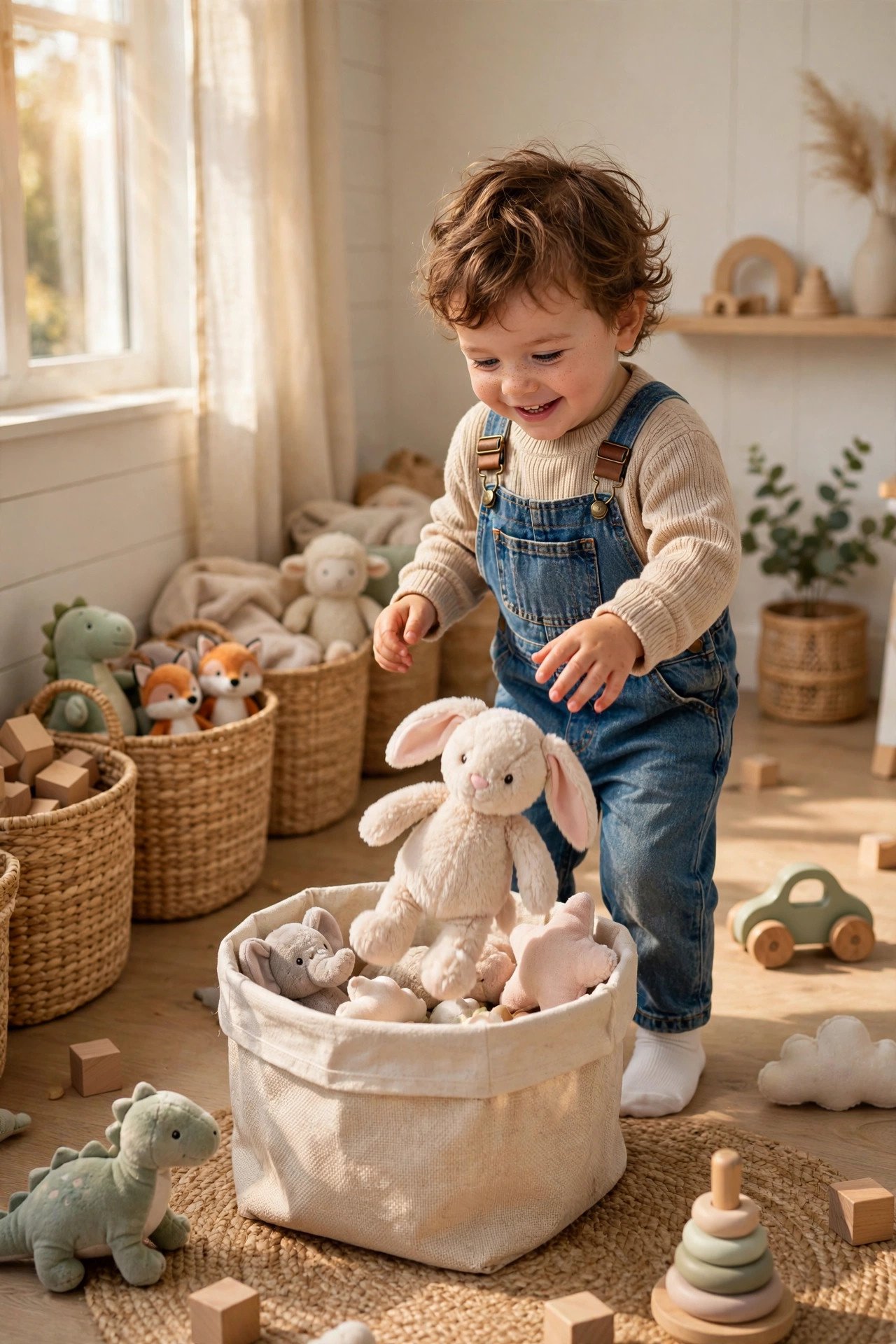
My daughter was two when she first cleaned by carrying a single stuffed bunny across the room and dropping it into a basket. I called it a rescue mission, because that is what it felt like to her. Give the job a name and a target, and cleanup turns into a game instead of a battle.
Here is how we run it in our house:
- One basket per corner, so every toy has a visible home
- A two minute song to race against
- Big cheers for the last toy, every single time
Her job is the putting, not the sorting. We keep a little picture chart on the wall showing where each basket lives, and our printable daily routine chart for kids has a cleanup square she points to proudly. You can quietly sort the bins later, and nobody is sad about it.
Laundry Toss: Hamper Basketball for Tiny Hands
The hamper used to sit across the room, which meant the clothes always landed on the floor. Then my toddler discovered he could throw them. So we made it official. Now dirty clothes have a travel plan, and it involves a jump shot.
Stand the hamper against the wall and hand him one item at a time. Count each swish together. Tiny hands build arm strength and coordination, and the real prize is clothes landing in the hamper instead of beside it.
- Put a soft rug under the hamper so it does not slide when he dunks
- Let him drop socks up close and toss pants from one step back
- Clap for the misses too, so trying stays fun
No score gets kept. The floor ends up clear either way.
💡 Quick Tip
Keep it close. A hamper a toddler cannot reach is a hamper they will ignore. Park one low basket in every room where clothes tend to land.
Spill Patrol: Wiping Up With Their Own Little Cloth
The first time my two year old mopped up her own spilled milk, she stood back and nodded at the floor like a tiny supervisor. Hand a toddler their own small cloth and spills stop being disasters. They become practice.
Fold a washcloth into quarters so it fits their hand. Keep two or three in a low drawer they can reach without help. When something splashes, point to the cloth instead of rushing over with paper towels.
- Juice on the table: they press, you guide the first swipe
- Crumbs on the tray: they sweep them into their palm
- Water on the floor: they stomp the cloth over it, and honestly that one cleans just fine
Their squares will be damp. The floor will dry. The habit is what matters here, not the shine.
Bed-Making, Toddler Style: Pulling Up the Covers
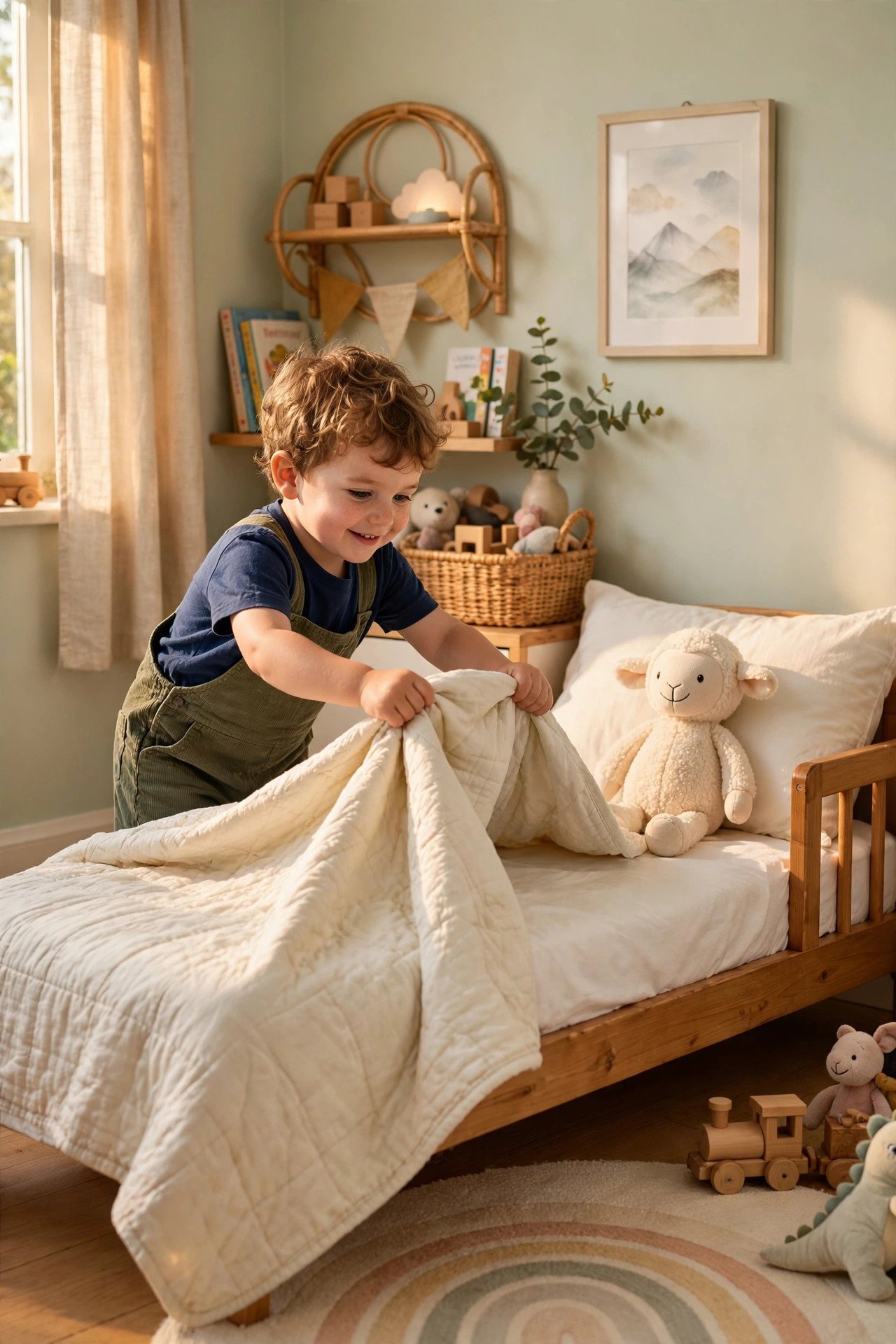
At four, my son’s idea of a made bed was pulling the blanket halfway up and declaring victory. I stopped fixing it. A lumpy bed he made himself beats a smooth one I made for him, because the point is ownership, not presentation.
Hand him the bottom corner while you take the top, or let him climb up and do it all. Pillow on top, stuffed animal on duty. Done. It takes about two minutes and it changes the whole look of the room. He runs off to school with his chest out a little, and that is worth every wrinkle.
☀️ Their morning bed routine
Table Setter: Napkins, Cups, and Placemats
Tiny rule: if they can carry it without breaking it, they can set it.
Start with the unbreakables: napkins, sturdy cups, placemats. Show them the map once, one napkin under each plate, and let them run it for a week before real plates join the crew. My daughter used to fold the napkins into little triangles. They were crooked. Dinner tasted better anyway.
Once they have the hang of it, add a small water pitcher and let them fill the cups. You might wipe a ring or two off the table. That is fine. When a cup lands in the wrong spot, I borrow a trick from our positive discipline strategies and describe what I see instead of correcting: the cup is next to the plate, and tomorrow it goes under it.
Nobody learns table setting from being corrected at the table. Show it before the meal, praise it during, and save the small adjustments for next time.
Start with napkins, cups, and placemats only.
Let them set for a full week before adding plates.
Praise the effort while you all sit down to eat.
Correcting their placement mid meal.
Starting with glass plates or heavy bowls.
Redoing the whole setting in front of them.
Pet Food Scooper: Feeding Furry Friends
Our dog figured out the routine before my son did. Every morning at seven, the food bowl got a visitor. Then the visitor started coming on his own, scoop in hand, very serious about the job.
Keep the food in a container with a lid your child can open. Mark the scoop with a line so they know exactly how much. Show them the steps once, then stand back. Most four and five year olds handle this with zero fuss, and animals make wonderful first bosses because they never criticize the technique.
The scoop becomes a morning anchor. Wake up, get dressed, feed the cat. Kids who carry one real responsibility before breakfast walk taller through the day. Ours started reminding us about the dog’s dinner before we remembered it ourselves.
Scoop the food up to the marked line on the cup.
Pour it slowly into the bowl so it does not spill.
Refill the water dish about halfway.
Wash hands with soap when the job is done.
Dishwasher Pro: Loading, Unloading, and the Sharp-Knife Rule
Here’s the belief most of us hold: the dishwasher is a grown up machine with hot water and sharp things. The truth is simpler. At six, a child can load and unload almost everything, as long as you teach one rule first.
The sharp knife rule: knives point down in the basket, and Mom or Dad always handles the big kitchen knife. Say it once, make it a rule of the house, and let them own the rest. Plates slide into the slots. Bowls nestle on top. Cups go on the top rack, upside down, so they do not fill with water.
Unloading is the real training ground. They learn where everything lives. In our house the silverware basket became a sorting puzzle: forks with forks, spoons with spoons. It takes ten unhurried minutes the first few times. Then it becomes automatic.
A sink full of mystery items, and one parent doing all the loading, unloading, and sorting alone.
Plates in slots, cups upside down, knives pointed down, and a kid who knows exactly where the spatulas live.
Laundry Sorter: Lights, Darks, and the Sock-Matching Game
Sorting laundry is basically a color matching game, and six year olds are very good at matching games. This is the chore that looks hard from the outside and feels easy the moment you play it once.
Dump the basket on the bed. Make three piles: lights, darks, and colors. Toss each item and let them call it. They will argue about a grey shirt, and that is part of the fun. Then comes the sock game. Scatter every sock on the floor and let them hunt for pairs. Our record for a lost sock saga is three weeks, and the reunion was celebrated properly.
They do not need to run the machine yet. Sorting is a full job on its own, and it removes the most boring part of laundry day from your plate.
| Their job ✅ | Skip for now ⏳ |
|---|---|
| Sort lights, darks, and colors into piles. | Adding detergent or starting the machine. |
| Match every sock pair on the floor. | Folding fitted sheets, which stump adults too. |
| Carry the sorted piles to the laundry room. | Moving heavy wet loads on their own. |
Bathroom Helper: Wiping Counters and Mirrors
The payoff: a mirror wiped by a seven year old still looks better than a mirror nobody wiped all week. Helped beats spotless every time, and the bathroom stays guest ready with almost no effort from you.
Hand them a damp cloth for the counter and a dry one for the mirror. Small circles, top to bottom. Show them how to wring the cloth so water does not run down the cabinet. Then let them work while you handle the toilet or the floor, side by side. It takes twice as long as doing it myself, and I’m learning to treat that as the point, not the problem. That slower pace with a helper beside me is the kind of slow motherhood I want to practice more of.
Two clean surfaces, one proud kid, and a habit that sticks.
A streaky mirror cleaned by your child beats a spotless mirror you cleaned alone, every single week.
Full Laundry Boss: From Washer to Folded Drawer
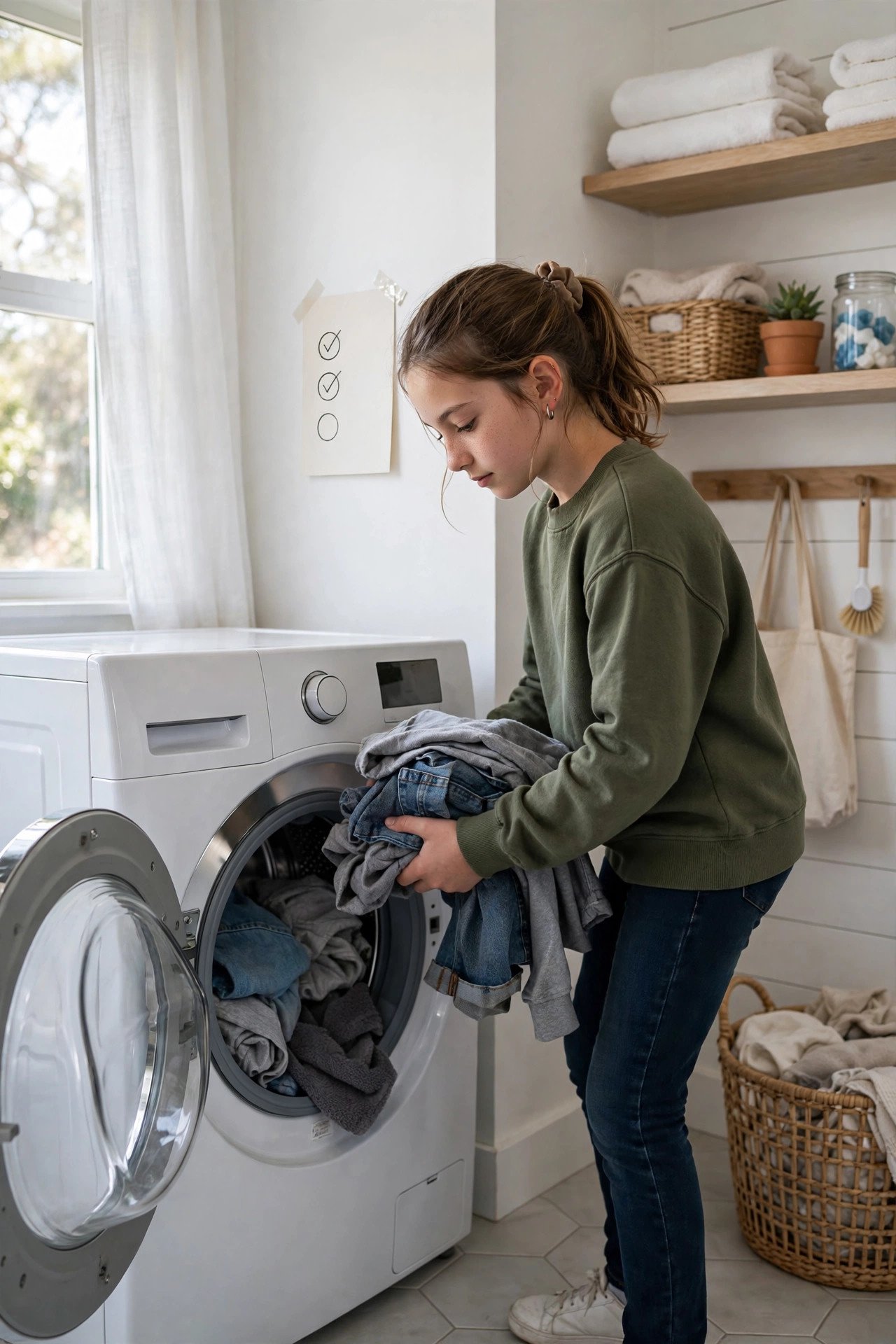
By nine or ten, most kids can run the entire laundry cycle, if someone teaches it in order. The mistake is showing it all at once. Teach it like a recipe: one step per week, until the chain is theirs.
Week one: sort. Week two: load the washer and add the detergent. Week three: move wet clothes to the dryer without leaving them balled up. Week four: fold and put away. Write the steps on an index card and tape it to the machine. Our card shows the detergent amount in big numbers, because guessing is how you get a soap volcano.
Folding takes practice, and their shirts will look like burritos for a while. Burritos fit in drawers just fine.
📌 Good To Know
Teach the dryer lint trap as step zero. It takes ten seconds, it matters for safety, and kids remember rules better when they understand the why.
Kitchen Crew: Simple Meal Prep and Packing Lunches
The mistake most of us make is handing kids a recipe that is too long, then hovering the whole time. Start with assembly, not cooking. A nine year old can build a week’s worth of lunches faster than you can, once they know the formula.
Our lunch formula lives on the fridge: one protein, one fruit, one crunch, one drink. Sandwiches, wraps, pasta boxes. They pack five bags on Sunday night while music plays, and school mornings lose their worst scramble.
Then add one real cooked meal. Ours started with scrambled eggs and moved on to quesadillas. They learn the stove rules alongside the recipe: handles turned in, oven mitt on, and you stay in the kitchen while the burner is on. Independence grows one safe step at a time.
Yard and Curb Team: Trash, Recycling, and Raking
I noticed something the first time my ten year old took the trash to the curb alone. He came back standing a little straighter. Outdoor chores carry weight, literally and otherwise. They are visible. The neighbors see. The kid knows it mattered.
Start with the weekly rhythm: trash bin to the curb, recycling sorted beside it, bins rolled back the next morning. Then add seasonal work. Raking leaves into a pile is a chore and a playground in the same afternoon. Sweeping the porch takes five minutes and changes the whole entryway.
Give them their own pair of work gloves. It sounds small, but gear makes a job feel official. Official jobs get done without nagging.
- ▸Trash bin to the curb the night before pickup.
- ▸Recycling sorted and set beside it.
- ▸Bins rolled back by the next morning.
- ▸Porch swept clean in about five minutes.
- ▸Leaves raked into one very jumpable pile.
Frequently Asked Questions
What age should kids start doing chores?
Around age two, with tiny jobs like putting toys back and wiping spills. The job should take a few minutes and end with a win. That early habit of contributing matters more than the chore itself.
How many chores should a child have at one time?
One or two real jobs beats a long list. A long list overwhelms them and exhausts you, because you end up managing it. Add a new job only after the current one runs on autopilot.
What if my child refuses to do their chore?
Stay calm and hold the boundary. Connect the chore to something natural: the dishwasher runs after the table is cleared, and then we play. Arguing about it makes the job bigger than it is. If refusal is a daily battle, that’s a discipline pattern to work on, not a chore problem.
Should I pay kids for chores?
Keep expected family contributions separate from paid work. Daily chores are how the household runs. If you want to teach earning, offer pay for extra jobs outside the normal list, like washing the car or deep cleaning the garage.
Is it okay if they do the chore badly?
Yes, especially at first. A streaky mirror and a lumpy bed are part of learning. Redo it quietly later if you must, but never redo it in front of them. Critiquing the result teaches them that trying is not safe.
Conclusion
Start smaller than you think, stay longer than feels natural, and let crooked results stand. Chores for kids by age work because a two year old who tosses laundry into a hamper becomes a ten year old who runs a full load without being asked. The skill builds slowly, one small job at a time, and your home gets lighter with every handoff. Pick one chore from your child’s age group this week and teach just that one. By next month, you’ll be reaching for the next.
📌 Save this to your parenting board on Pinterest so you can find the right chore for the right age whenever you need it.
You Might Also Like
- Positive Discipline Strategies That Actually Work at Home
- The Slow Motherhood Guide: Doing Less, Being More
- Screen-Free Activities for Kids That Keep Them Busy for Hours
LumaParenting Guide
Turn “help” into a real system.
Chore lists for every age from 2 to 12, the step-by-step system for teaching and rotating jobs, and reward systems that actually work — 61 pages that end the nagging.
61-page PDF · Instant download · Prints on US Letter & A4 · $9.99
Get the Guide — $9.99