It was raining, the tablet was charging, and my two kids were circling the living room like small sharks. I could feel the whining building. Every parent knows that exact moment, the one where you would hand over a screen for ten minutes of quiet, and then feel guilty about it for the rest of the day.
Here is what I learned after many rainy afternoons: kids do not need a screen, they need a starting point. Most of the time they are not bored, they are stuck. Give them one small spark, a fort to build or a hunt to run, and they will take it further than you expected. These are 25 screen-free activities for kids that have genuinely worked in our house, tested on real afternoons with real messes and real short attention spans.
You do not need expensive toys or perfect crafts. The activities that keep kids busy longest are open-ended: building, hunting, making, and pretending. Start the activity with them for five minutes, then step back.
In this post:
1. Build a Blanket Fort City
2. Open a Playdough Bakery
3. Turn Cardboard Boxes Into Anything
4. Make Sticker Story Scenes
5. Bake Something Simple Together
6. Run an Indoor Scavenger Hunt
7. Paint With Water, Zero Mess
8. Set Magnet Tile Challenges
9. Put On a Sock Puppet Show
10. Build a Living Room Obstacle Course
11. Pair Audiobooks With Coloring
12. Try Junk Modeling With Recyclables
13. Start a Nature Collection
14. Freeze Dance, Then Freeze Draw
15. Teach a Real Card Game
16. Pull From a Drawing Prompts Jar
17. Open a Pretend Restaurant
18. Do Kitchen Science Together
19. Thread Beads or Pasta Necklaces
20. Make Shadow Puppets on the Wall
21. Write Real Letters to Family
22. Plant Seeds and Watch Them Grow
23. Build a Marble Run From Tubes
24. Make a Quiet Reading Tent
25. Throw a Ten Minute Dance Party
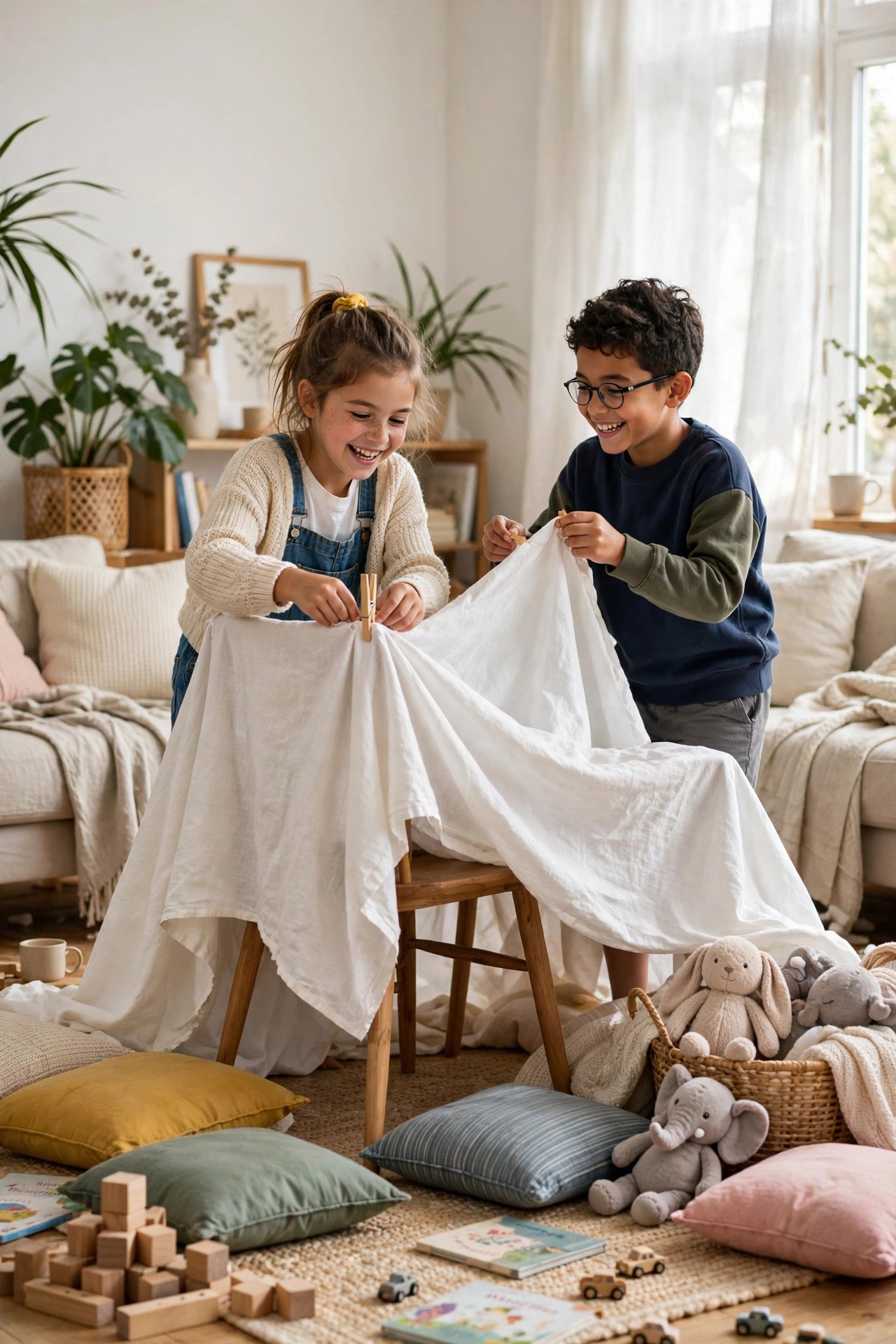
1. Build a Blanket Fort City
Every kid on earth loves a fort, but one fort gets old fast. The trick is to build a whole city: one blanket over the couch for the house, one over two chairs for the shop, a tunnel of cushions connecting them. In our house this once lasted three hours because the “mayor” kept issuing new building permits.
Hand over every blanket, sheet, and clothespin you own. Clothespins are the secret weapon. They hold sheets to chair backs better than anything. Let the kids decide what each building is for. Your job is to deliver “mail” (folded paper) to each address.
💡 Quick Tip
Weigh down sheet edges with books so the roof does not collapse mid game. A collapsed fort ends the game faster than anything.
2. Open a Playdough Bakery
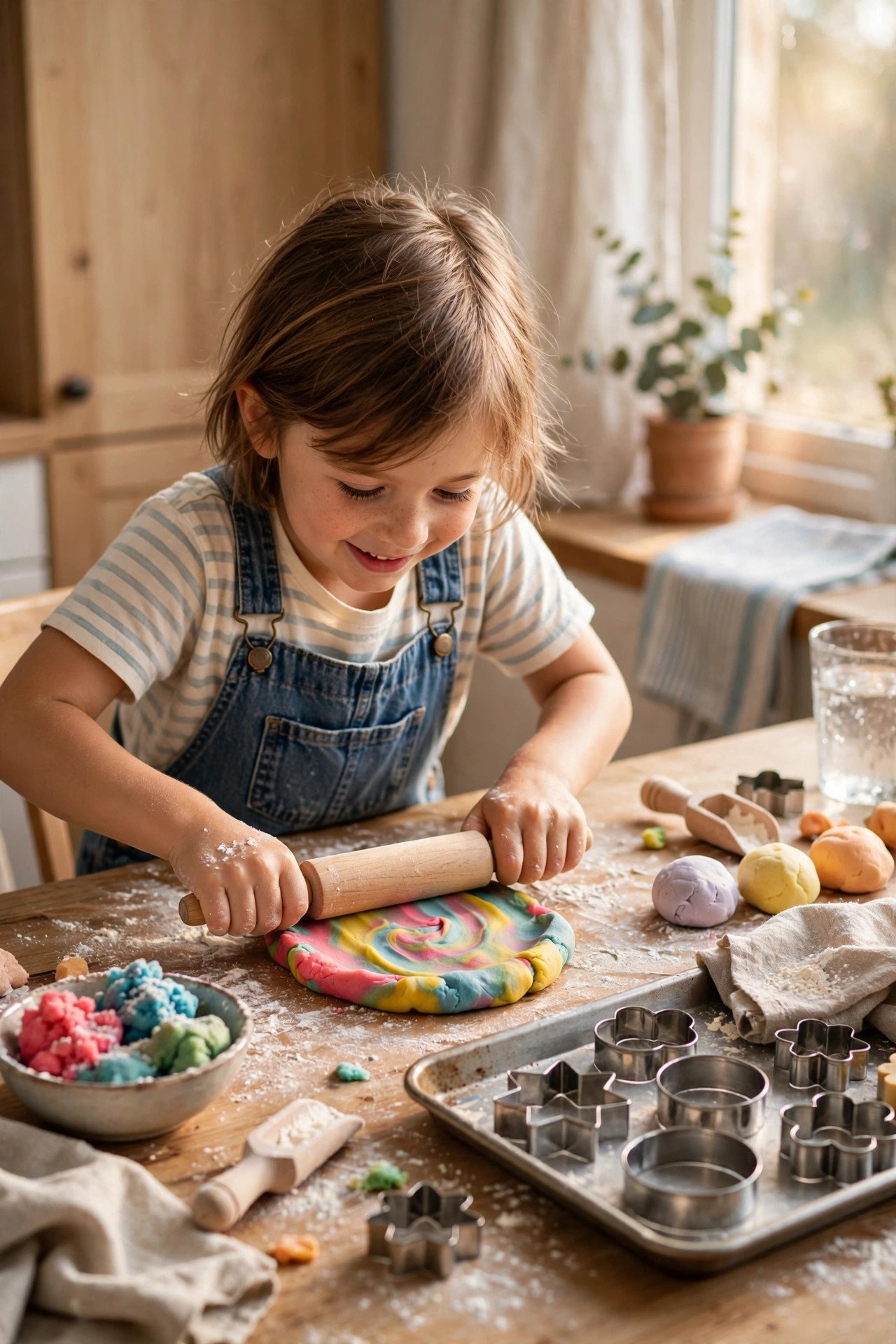
Playdough alone lasts about eleven minutes in our house. Playdough with a purpose lasts an hour. Set up a bakery: a tray as the counter, cookie cutters as the menu, and small paper bags for “orders.” Take your kid’s order like a real customer and watch them get very serious about frosting.
Rolling, cutting, and decorating builds hand strength without anyone noticing they are practicing. Keep a damp cloth nearby for sticky fingers and the table stays clean.
3. Turn Cardboard Boxes Into Anything
Before you recycle that delivery box, hand it to your kids. A big box becomes a car, a shop, a rocket, or a house for stuffed animals, usually within minutes and always with great confidence. One rainy Saturday ours became a “veterinary clinic” and every toy in the house got a checkup.
Give them washable markers and let them decorate first, the decorating is half the fun. Cut windows and doors yourself with a box cutter, since cardboard defeats kid scissors. Then walk away. This one runs itself.
What to grab first
4. Make Sticker Story Scenes
Stickers are small, cheap, and weirdly powerful. Give your child a blank sheet of paper and a handful of random stickers, then ask one question: what is happening in this story? In our house the dinosaur sticker always ends up running a restaurant. Every time.
This builds storytelling and sequencing without feeling like learning. Keep a shoebox of mixed stickers, animals, stars, letters, and let them choose. The choosing is part of the play.
5. Bake Something Simple Together
Kids who “help” in the kitchen stay busy and you get snacks. Pick something forgiving: banana muffins, no-bake energy balls, or flatbread pizzas where each child decorates their own. Measuring, pouring, and stirring are real skills disguised as fun.
Expect flour on the floor. It wipes up. What surprised me was how proud my daughter was handing still-warm muffins to her grandparents, an afternoon activity that turned into a whole evening of glow.
Pick the recipe together and lay out every ingredient first.
Give each child one real job: pourer, stirrer, or taster.
Let them do the cleanup “washing up” with soapy water.
6. Run an Indoor Scavenger Hunt
Nothing burns kid energy like a hunt. Write ten clues on slips of paper, each leading to the next spot: under the couch, inside the laundry basket, behind the bathroom door. End with a small prize, a sticker or a piece of fruit with a face drawn on it.
For little ones who cannot read yet, draw the clues instead: a rough sketch of the fridge, the shoe rack, the bathtub. My son once spent forty minutes on a hunt I threw together in five. Best return on effort in this whole list.
Kids bouncing off the walls, asking for the tablet every four minutes.
Forty focused minutes of running, thinking, and giggling, and they ask to play again tomorrow.
7. Paint With Water, Zero Mess
This is the closest thing to magic for parents who hate cleanup. Fill a cup with water, hand your child a paintbrush, and let them “paint” the fence, the patio, or dark construction paper. The water shows up beautifully and vanishes as it dries, so they can start over forever.
It works on chalkboards too. In summer we paint the whole driveway and watch our art disappear by lunchtime, which my kids find endlessly funny.
| Water painting | Regular painting |
|---|---|
| Zero cleanup, dries on its own | Aprons, drop cloths, scrubbing |
| Endless redo, never “wastes” paper | One sheet per attempt |
8. Set Magnet Tile Challenges
Magnet tiles are wonderful, but after the tenth tower kids drift. Challenges bring them back. Try: build the tallest tower that can hold a toy car, build a bridge a ball can roll under, or copy a pattern you draw on paper. Small goals, big focus.
Take a photo of each creation before it gets knocked down. We have a whole album of “great builds” and the kids flip through it like a trophy book.
Open-ended toys stay interesting when you add a tiny mission. The mission is the game.
9. Put On a Sock Puppet Show
Dig out the lonely socks, draw faces with markers, and you have a cast. Hang a blanket over a doorway for the stage. The show itself matters less than the preparation: naming characters, deciding the story, rehearsing the dramatic entrances.
Let them perform for you, then swap roles. My dramatic reenactment of a sock pirate was, according to my audience, “okay I guess,” which is high praise from a six year old.
- ▸Old socks, markers, and yarn for hair
- ▸A blanket over a doorway as the stage
- ▸A phone to film the show for grandparents
10. Build a Living Room Obstacle Course
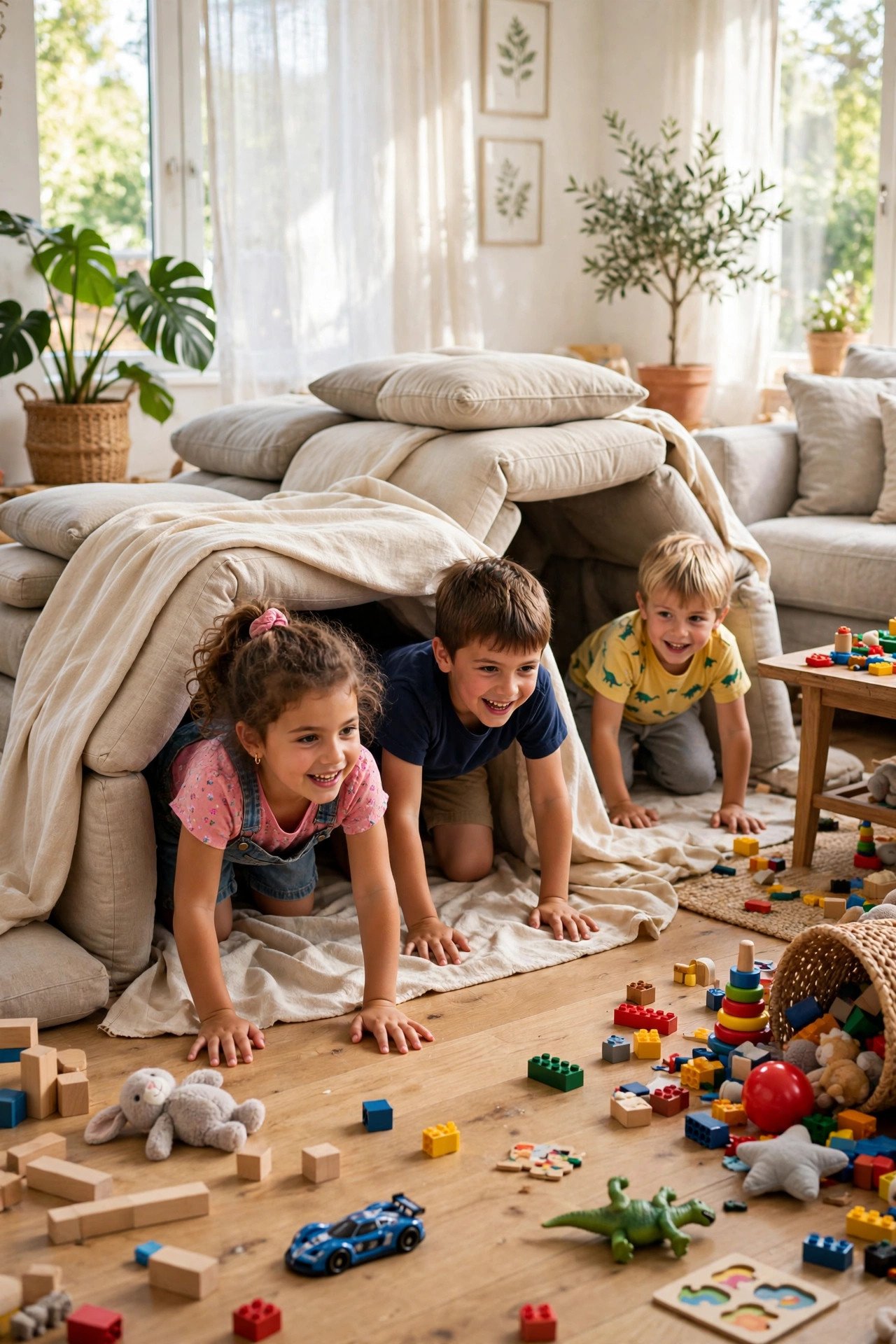
Couch cushions on the floor are lava. The hallway is a balance beam (a line of tape). Under the dining table is the tunnel. Time them with your phone and watch them beg to beat their own record, which buys you another twenty minutes easy.
Build it together first, then let them redesign it. Kid-designed courses are always harder and more creative than anything I come up with. Move breakables first, learn from my mistakes.
Use couch cushions, tape lines, and tunnels.
Let kids time each other and redesign the course.
Chairs as climbing frames, they tip.
Racing near the TV or glass tables.
11. Pair Audiobooks With Coloring
Here is a combination most parents overlook: a story playing out loud while little hands stay busy. Borrow audiobooks from your library app, print free coloring pages, and you have a calm hour that feels like a treat. It works in the car too.
Start with short chapter books or story collections. My kids now ask for “listening time” the way they used to ask for cartoons, which still surprises me.
📌 Good To Know
Most public libraries offer free audiobooks through their apps. You already pay for it with your taxes, so use it.
12. Try Junk Modeling With Recyclables
Save your cardboard tubes, bottle caps, egg cartons, and boxes for a week. Then dump the whole collection on the table with tape and glue and announce: build anything. Robots, castles, vehicles, creatures, the weirder the better.
This is one of the best screen-free activities for kids because there is no right answer. A toilet roll becomes a telescope or a tower or a tunnel for toy cars. When they are done, take a photo and recycle the rest guilt free.
13. Start a Nature Collection
Give each child a small bag or egg carton and head outside with one mission: find twelve interesting things. Leaves, smooth stones, seed pods, feathers, bark. Back home, sort the treasures by color, size, or “weirdness.”
An egg carton is the perfect sorting tray, twelve little compartments. We keep a shelf of “museum pieces” and the kids still remember where every single one came from. Outdoor time plus sorting practice, no planning needed.
What to grab first
14. Freeze Dance, Then Freeze Draw
Everyone knows freeze dance, but here is the upgrade that doubles the play time. Dance wildly while the music plays, freeze when it stops, and then, while frozen, notice your pose. When the music ends for good, everyone draws the silliest frozen pose they held.
It sounds small, but the drawing round turns a five minute game into a half hour activity. My kids now request “freeze draw” by name.
15. Teach a Real Card Game
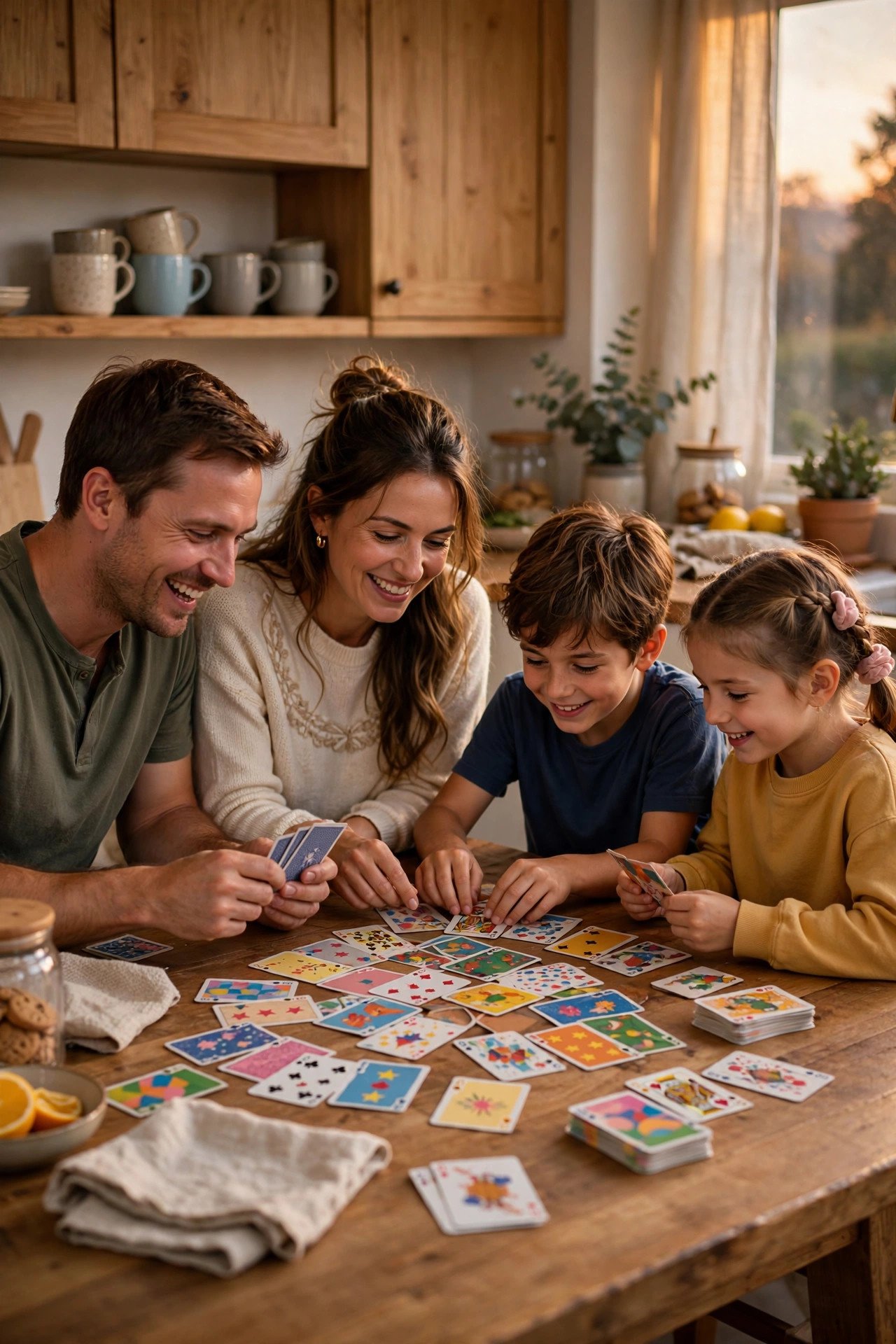
A deck of cards costs almost nothing and teaches more than most apps: numbers, strategy, taking turns, losing gracefully. Start with Go Fish for little ones, move up to Uno or Crazy Eights, and let older kids try Rummy.
Keep a “family deck” in a kitchen drawer so it is always within reach. Some of our best conversations have happened over cards, the kind where kids talk because their hands are busy and their guard is down.
Ages 3 to 5: Go Fish or simple matching games.
Ages 5 to 8: Uno, Crazy Eights, Old Maid.
Ages 8 and up: Rummy, Hearts, or simple poker with beans.
16. Pull From a Drawing Prompts Jar
“I don’t know what to draw” ends more art sessions than anything. Fix it with a jar of prompts on slips of paper: a dragon eating ice cream, our house on the moon, the dog as a superhero. Kids pull one and draw it, and the sillier the prompt the better.
Let the kids write the prompts too. Their ideas are always stranger than yours, which is exactly the point. Refill the jar together when it runs low.
Blank paper, blank stare, “I can’t draw.”
A dragon eating ice cream, drawn with total commitment, taped to the fridge.
17. Open a Pretend Restaurant
This one eats an entire afternoon. Kids make menus (drawing food and “prices”), set tables with real plates, and take your order with great ceremony. Cook something simple for real, like quesadillas, and serve it as the restaurant special.
The magic is in the roles: chef, waiter, customer. Rotate them so nobody fights over being the chef. In our house the waiter always “forgets” the order, which is apparently hilarious every single time.
| Role | Job |
|---|---|
| 👨🍳 Chef | Cooks the real snack, plates it fancy |
| 📝 Waiter | Takes orders on a notepad, serves |
| 🍽️ Customer | Orders, “pays” with paper money, reviews |
18. Do Kitchen Science Together
Baking soda volcanoes never get old, but there is more where that came from. Try: sink or float predictions with fruit, color mixing in muffin tins with food coloring, or the classic pepper and soap trick where pepper scatters when soap touches the water.
Ask “what do you think will happen” before each experiment. The predicting is the learning, and kids take their predictions very seriously. Keep towels handy, science is rarely tidy.
Always ask for a prediction first. A kid who guessed is a kid who is paying attention.
19. Thread Beads or Pasta Necklaces
Stringing is quiet, focused work, and it is wonderful for little fingers. Use real beads for older kids, or dye dry penne pasta with food coloring for toddlers (it threads perfectly onto yarn). Make necklaces, bracelets, or garlands for the next birthday in the family.
Put on an audiobook while you string together. This is one of those rare activities where everyone calms down, including the parent.
⚠️ Watch Out
Small beads are a choking hazard for under-threes. Stick to dyed pasta or large wooden beads for toddlers.
20. Make Shadow Puppets on the Wall
Wait for evening, turn off the lights, and point a flashlight at a blank wall. Hands become birds, dogs, and monsters. There are simple hand shapes to learn together, and inventing new ones is half the fun.
Then make it a story: one person narrates while the other performs the shadows. Our shadow dragon saga ran for four chapters before bedtime intervened.
Use a blank wall and a steady flashlight.
Take turns narrating and performing.
Shining the light in anyone’s eyes.
Trying it in a bright room, it will not work.
21. Write Real Letters to Family
Nobody sends real mail anymore, which is exactly why a letter feels like treasure. Have your kids write or draw letters to grandparents, cousins, or friends, address the envelopes, stick on stamps, and walk them to the mailbox together. Then wait for the replies, which always come.
Drawing counts as writing for little ones. My daughter’s first “letter” was a purple scribble that her grandmother framed. I am not even joking.
What to grab first
22. Plant Seeds and Watch Them Grow
A pot, some soil, and a packet of seeds is a weeks-long activity disguised as an afternoon one. Beans and sunflowers sprout fast enough to hold a child’s attention. Let them do the watering (with a small watering can they can manage) and mark the growth on the pot with a marker line.
The daily check becomes a ritual. “Did it grow?” is the first question every morning in our house during sprouting season.
23. Build a Marble Run From Tubes
Save paper towel tubes and tape them to a wall or a big piece of cardboard in zigzags and funnels. Drop a marble at the top and watch gravity do the show. Then comes the real game: redesigning it to make the marble take longer, go faster, or ring a bell at the bottom.
Painter’s tape holds tubes to walls without damage. This one secretly teaches physics, but do not tell the kids.
Tape tubes to the wall in a zigzag, testing with a marble as you go.
Add a bell or cup at the bottom as the finish line.
Challenge: make the marble take a full ten seconds.
24. Make a Quiet Reading Tent
Different from the fort city: this is a calm-down space, not a playground. Drape one sheet over two chairs, add pillows and a basket of books, and declare it the reading tent. Some kids need a cozy small space to settle, and this gives them one.
We use ours for the after-lunch reset. Twenty minutes of tent reading and the whole afternoon goes smoother. No rules inside except quiet voices.
25. Throw a Ten Minute Dance Party
When nothing else works, dance. Push back the furniture, put on three favorite songs, and go absolutely wild for ten minutes. Silly dances only, the sillier the better. It resets everyone’s mood like nothing else.
We do this at 4pm on the dot on hard days, it has a name in our house: “the wiggles meeting.” Ten minutes of dancing buys hours of goodwill.
| Song 1 | Song 2 |
|---|---|
| A fast favorite, full energy | A silly one, funny dance moves |
| Song 3 | A slow one to wind down |
You Might Also Like
- Printable Daily Routine Chart for Kids (Free Download): build calmer mornings and bedtimes with a visual chart kids actually follow
- 15 Sensory Play Ideas for Toddlers Using Things You Already Have: simple sensory bins and play recipes from your kitchen cupboards
Frequently Asked Questions
How do I get my kids to play independently without screens?
Start the activity with them for the first five minutes, then step back. Kids engage longer when an adult helps them over the starting hump. Open-ended activities like building and pretend play hold attention far longer than anything with fixed rules.
What are the best screen-free activities for a rainy day?
Blanket forts, scavenger hunts, baking, puppet shows, and obstacle courses are all indoor-friendly. The key on rainy days is mixing active play (dance parties, obstacle courses) with calm play (coloring, threading) so energy gets burned and then settled.
How long should screen-free play last?
There is no magic number. Toddlers might manage 15 to 20 focused minutes, while school-age kids can go for an hour or more on a good project. Follow their lead, and quit while they are still having fun so they want to come back to it.
Do I need to buy special supplies?
No. Almost everything on this list uses things you already own: blankets, boxes, paper, kitchen ingredients. That is deliberate. The best screen-free activities for kids do not require a shopping trip.
Wrapping Up
Twenty-five ideas is a lot, but you do not need all of them. Pick three that fit your kids’ ages and the stuff you already have at home, and try one this week. The real secret was never the perfect activity, it was the five minutes you spend starting it together.
Save this list for the next rainy afternoon, the next school break, or the next time the tablet needs charging. Your kids are more capable of entertaining themselves than any of us give them credit for. They need a spark.
LumaParenting Guide
25 ideas not enough? Here are 100.
This post is just a taste. The Screen-Free Play Guide packs 100 activities sorted by age, setting, and prep time — plus the boredom-jar system and a weekly planner, so you never hear “I’m booored” again.
39-page PDF · Instant download · Prints on US Letter & A4 · $9.99
Get the Guide — $9.99
2 thoughts on “25 Screen-Free Activities for Kids That Actually Keep Them Busy”